The Phoenix Force Explained: What It Is, What It Wants, And Why It Keeps Choosing Jean
It is not a bird, it is not possession, and it is not evil. A full explainer on Marvel's cosmic force of creation and the host relationship that keeps ending badly.
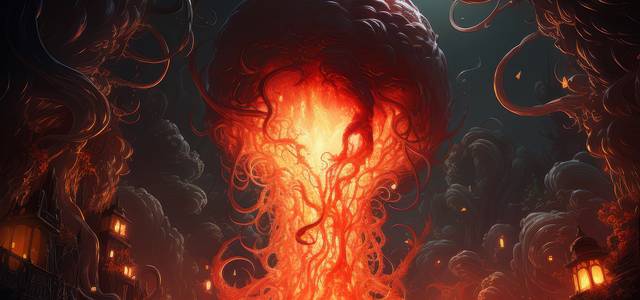
The Phoenix Force is the most powerful thing the X-Men regularly interact with and the most consistently misexplained. It is not a demon, it is not Jean Grey's dark side, and — this is the one that surprises people — it is not a destructive entity.
With X-Men '97 into its second season since 1 July 2026 and The X-Men circling December 2028, the Phoenix is about to be relevant to a very large new audience. Here is what it actually is.
What The Phoenix Force Is
The Phoenix is a cosmic entity of the highest order — the nexus of all psionic energy in the universe and the embodiment of life's will to exist. Its stated function is creation followed by necessary destruction, in that order.
- It is as old as the universe and will outlast it. Marvel has consistently placed it above every mortal power tier and adjacent to abstract entities like Eternity and Death.
- Its defining principle is renewal through burning. It destroys what has stopped growing so that something else can, which is a cosmic function rather than a moral position.
- It cannot be killed, contained or refused for long. It has been shattered into fragments, sealed, bargained with and temporarily bound, and it has always reassembled.
- The bird shape is an expression, not a body. The raptor silhouette is how a being of that scale renders itself legible to minds that need a shape to look at.
This places it in the second tier of our ranking of the most powerful Marvel characters — enormous ceiling, unreliable delivery, and no way to negotiate with it.
The Host Relationship
The Phoenix requires a host to act with precision, and the selection criteria are consistent across fifty years of stories.
- It seeks hosts with extraordinary psionic capability. Telepaths and telekinetics of Omega classification are the natural fit, which is the mechanical reason it gravitates toward Jean Grey.
- It seeks emotional intensity. A host who feels enormously is a better conduit than a disciplined one, which is precisely why the relationship is so dangerous — it selects for the least stable candidates by design.
- The bond is symbiotic rather than parasitic. The host gains cosmic-scale power and the Phoenix gains focus, perspective and a moral compass it does not natively possess.
- Corruption is not inevitable. Rachel Summers, Hope Summers and the Phoenix Five have all held it with varying success. Jean's case is the famous one because it went worst, not because it was typical.
The Dark Phoenix Saga, Accurately
The most adapted and most misremembered story in X-Men history, and the details matter.
In Claremont and Byrne's 1980 arc, Jean is manipulated by Mastermind and the Hellfire Club, who use illusion to erode her psychological restraints. The Phoenix, bonded to a host whose inhibitions have been deliberately dismantled, escalates into Dark Phoenix — and consumes the D'Bari star, killing five billion people who never knew she existed.
- The genocide is the entire point. Dark Phoenix is not dangerous because she fights the X-Men; she is dangerous because she committed a casual atrocity while barely paying attention.
- The Shi'ar demand her execution and the ending — Jean choosing to die rather than risk it happening again — was a late editorial mandate. The original ending was depowerment, and the mandate produced a far better story.
- Marvel later retconned the arc so that the Phoenix had duplicated Jean and stored the original in a cocoon, which is the resurrection mechanism that made the character sustainable. Purists still object and they have a point.
- It has been adapted three times on film and never successfully, which is the strongest evidence that the story needs the length Claremont gave it. We rank the run first in our list of Marvel's best comic runs.
Dark Phoenix is not a supervillain arc. It is a story about a good person committing genocide by accident and being unable to live with it.
Hosts And Outcomes
| Host | Era | Outcome | Notes |
|---|---|---|---|
| Jean Grey | 1976 onward | Dark Phoenix, then death | The defining bond; repeatedly renewed |
| Rachel Summers | 1980s | Sustained, controlled | The most successful long-term host |
| The Phoenix Five | Avengers vs X-Men | Split five ways, ended badly | Proved the force resists division |
| Hope Summers | Avengers vs X-Men | Used to restore mutantkind | The most constructive use on record |
| Quentin Quire | Modern | Brief, chaotic | A demonstration of poor host selection |
| Namor | Avengers vs X-Men | Catastrophic | One fifth of the force flattened Wakanda |
| Cyclops | Avengers vs X-Men | Killed Charles Xavier | The most consequential host failure |
The Phoenix Five row is the most instructive. Splitting the force across five hosts diluted its judgment rather than its power, and Scott Summers killing Charles Xavier under its influence remains the single worst outcome any host has produced.
Comics Versus Screen
Every screen adaptation has softened the Phoenix in the same direction, and it is worth being specific about the change.
- The Fox films treated the Phoenix as Jean's repressed psychological alter ego rather than an external cosmic entity. That is a fundamental reinterpretation, not a simplification, and it removes the entire cosmic dimension of the story.
- X-Men '97 is closer to the source than any live-action version, treating the Phoenix as external, ancient and genuinely uninterested in human moral categories.
- The D'Bari genocide has never been depicted at full weight on screen, which is why no adaptation has generated the moral horror the comic does.
- The X-Men is dated 15 December 2028 with Jake Schreier directing and Michael Lesslie writing. No casting has been announced, Feige has indicated a lean toward largely unknown young actors, and every Phoenix rumour attached to it is unconfirmed.
Why It Keeps Coming Back To Jean
The in-universe answer is compatibility — Jean is an Omega telepath and near-Omega telekinetic, the broadest psionic profile in mutantkind, which we lay out in our ranking of the strongest mutants. The Phoenix has stated repeatedly that she is its preferred vessel and, in some tellings, that the bond began when she was a child and first reached out during a friend's death.
The publishing answer is that the Phoenix is the best metaphor Marvel has for the terror of unlimited female power, and Claremont wrote it that way on purpose. Sixty years of X-Men stories have never found a better one, which is why the force keeps returning and why every writer who touches it eventually writes the same tragedy.
For where the Phoenix sits against the universe's other apex threats, see the ten most dangerous cosmic entities ranked.
Frequently asked
What is the Phoenix Force?
Is the Phoenix Force evil?
Why does the Phoenix Force choose Jean Grey?
Will the Phoenix Force appear in the new X-Men movie?
Characters in this story




Catching up on the MCU? See where this fits on our full timeline.
Read next
The Strongest Mutants In Marvel, Ranked By Omega Potential
Omega level is a real classification with real rules, and most power rankings ignore them. Fifteen mutants ranked…

The 10 Most Dangerous Cosmic Entities In Marvel, Ranked By Threat
Power and danger are different measurements. These ten cosmic beings are ranked on how much damage they will…
The 12 Best Marvel Comic Runs Of All Time, And Where To Start Reading
The runs that changed the medium, judged on influence and on whether they still read well. Includes exactly where…