The Limits Of Scarlet Witch's Chaos Magic, Explained
Wanda rewrote reality with three words in the comics and struggled to hold a town in the films. We map the actual rules of chaos magic and where they break.
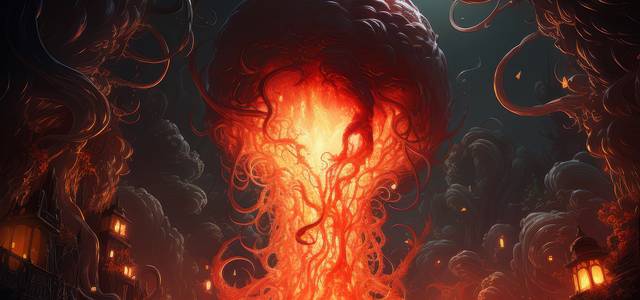
Chaos magic is the most inconsistently written power in Marvel, and that inconsistency is not entirely accidental — it is a power defined by the absence of rules, which makes writing rules for it a contradiction the publisher has never fully resolved.
It does have limits though. They are just not the limits most people assume.
What Chaos Magic Actually Is
The original 1964 formulation was modest: Wanda Maximoff had hex bolts, a probability-altering power that made unlikely things happen. A gun jams. A ceiling collapses. Nothing is created and nothing is destroyed — the odds are simply bent.
- Probability manipulation is the foundation and it never goes away. Every later escalation is built on top of it rather than replacing it.
- Chaos magic proper was introduced through Agatha Harkness' tutelage and later tied to a demonic entity called Chthon, who possessed Wanda at birth on Wundagore Mountain.
- The critical escalation is the move from altering probability to altering existence. Bending odds means working within reality's rules; chaos magic means editing them.
- The Darkhold, a book written by Chthon, appears in both the comics and the MCU as the accelerant that pushes Wanda from the first mode into the second.
That distinction is the whole explainer. A hex makes an unlikely thing happen. Chaos magic makes an impossible thing true.
The Comic Ceiling: House Of M
House of M (2005) is the feat that decides every Scarlet Witch power argument, and it is worth being precise about what happened rather than gesturing at it.
- Wanda rewrote global reality, creating a world in which mutants were the dominant species and every major character had the life they most wanted. This was not an illusion — it was materially real and persisted for days.
- It survived scrutiny by telepaths, cosmic-aware characters and reality-sensitive beings. Only Layla Miller, whose power was specifically to restore memory, could break it.
- When it collapsed, Wanda said no more mutants and removed the X-gene from roughly ninety per cent of a species — millions of people, worldwide, permanently.
- That single act was the status quo of Marvel's mutant line for close to a decade and required a cosmic-scale event to reverse.
No other Earth-based character has a comparable feat. It places Wanda in the reality-authority tier we outline in our ranking of the twenty most powerful characters, above every conventional heavy hitter.
The Actual Limits
Five constraints appear consistently enough across sixty years to count as rules rather than writer preference.
1. It requires focus, and grief destroys focus
Every catastrophic misuse of chaos magic in the character's history follows an emotional collapse — the loss of her children, the death of Vision, the Westview anomaly. The power scales with emotional intensity and control scales inversely with it. That is not a bug in the writing, it is the character's tragedy stated as a mechanic.
2. It cannot create life that lasts
Billy and Tommy in the comics are constructs made from fragments of Mephisto's soul, and they dissolve when he reclaims them. The Westview versions in WandaVision cease to exist when the hex falls. Chaos magic can conjure a person and cannot sustain one, which is the single most consistent limit in the entire canon and the source of almost all her suffering.
3. Sustained alterations cost continuously
Reality edits are not fire-and-forget. Holding Westview took visible, constant effort, and House of M began degrading the moment Wanda's attention wavered. Compare this to an Infinity Stone alteration, which is stable once made — a genuine mechanical difference we cover in our Infinity Stones explainer.
4. It can be countered by a better-trained magic user
Agatha Harkness siphons chaos magic directly in WandaVision, and runes she carves prevent any magic but her own from working inside a space. Raw power loses to technique when the technique is specifically designed to counter it — which is why formal sorcery keeps beating higher-tier casters.
5. It does not confer knowledge
Wanda is repeatedly outmanoeuvred by opponents who understand what she is doing better than she does. The Darkhold offers power in exchange for corruption precisely because she has no formal training, and Multiverse of Madness turns on exactly that gap.
Comics Versus MCU
| Capability | Comics | MCU | Gap |
|---|---|---|---|
| Probability manipulation | Foundational, constant | Rarely depicted | Large |
| Reality rewriting | Global, in House of M | One town, at high cost | Very large |
| Dreamwalking | Not a defined power | Central to Multiverse of Madness | MCU original |
| Species-scale alteration | Yes, no more mutants | Never attempted | Total |
| Destroying an Infinity Stone | Not applicable | Yes, in Infinity War | MCU original |
| Countered by trained sorcerers | Rarely | Repeatedly | Reversed |
The most interesting row is the last one. In the comics Wanda routinely overwhelms trained magic users; in the MCU she is countered by Agatha, by runes, by Strange and eventually by her own conscience. The films made her more powerful in raw output and considerably more constrained in application, and both changes serve the same dramatic purpose.
A hex makes an unlikely thing happen. Chaos magic makes an impossible thing true. Everything about Wanda lives in the gap between those two sentences.
What The Darkhold Changes
The Darkhold is the accelerant in both continuities and its function is identical: it removes the training requirement and substitutes corruption. It is why a self-taught caster can suddenly perform feats that take a Sorcerer Supreme decades, and it is why doing so destroys her.
- In the comics the Darkhold is Chthon's own writing, and reading it invites his influence directly.
- Multiverse of Madness has Wanda destroy every copy across the multiverse at the cost of Mount Wundagore collapsing on her, which is deliberately ambiguous about her survival.
- Agatha All Along continued the Westview magic thread without her, establishing that MCU witchcraft has formal traditions Wanda never learned.
- Elizabeth Olsen's involvement in Vision Quest, arriving 14 October 2026, remains unconfirmed. Marvel has not commented despite persistent chatter, and every claim about her role is rumour.
For the formal magic system that keeps beating her, see how sling rings and the Mirror Dimension work.
Frequently asked
How powerful is Scarlet Witch?
What is chaos magic?
What are Scarlet Witch's weaknesses?
Is Scarlet Witch in Vision Quest?
Characters in this story
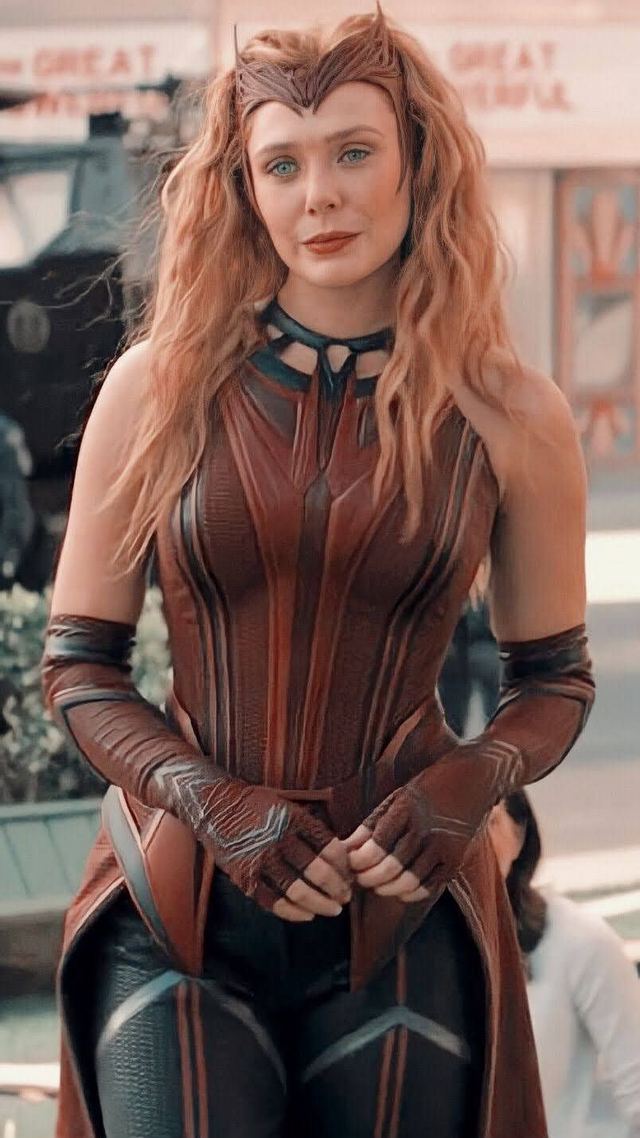
Scarlet Witch
Wanda Maximoff
Agatha Harkness
Agatha Harkness
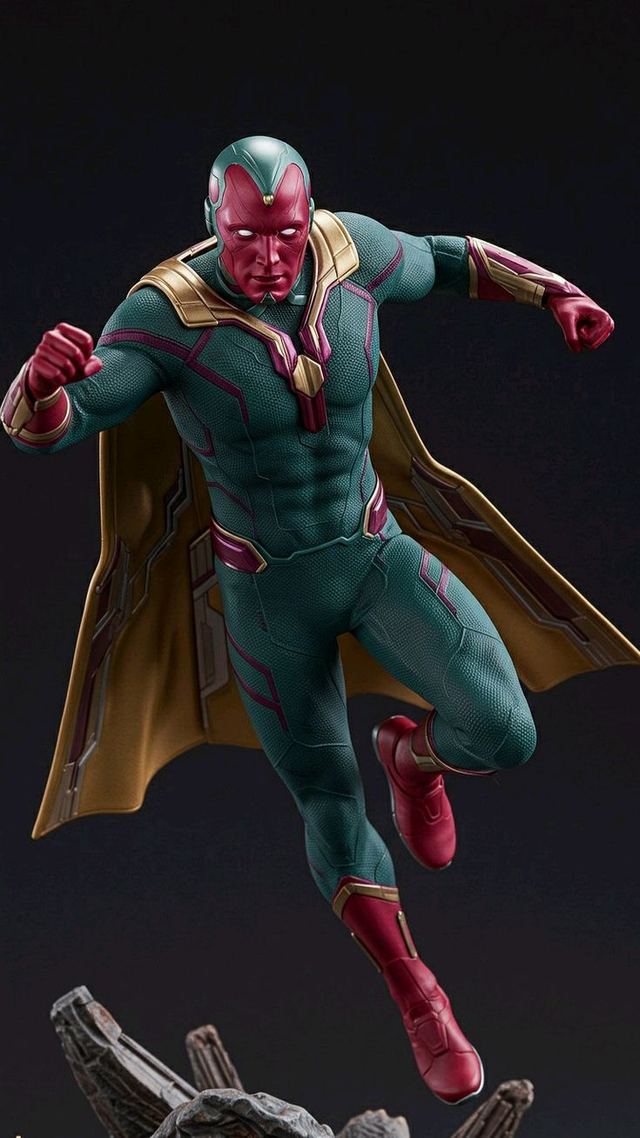
Vision
Vision
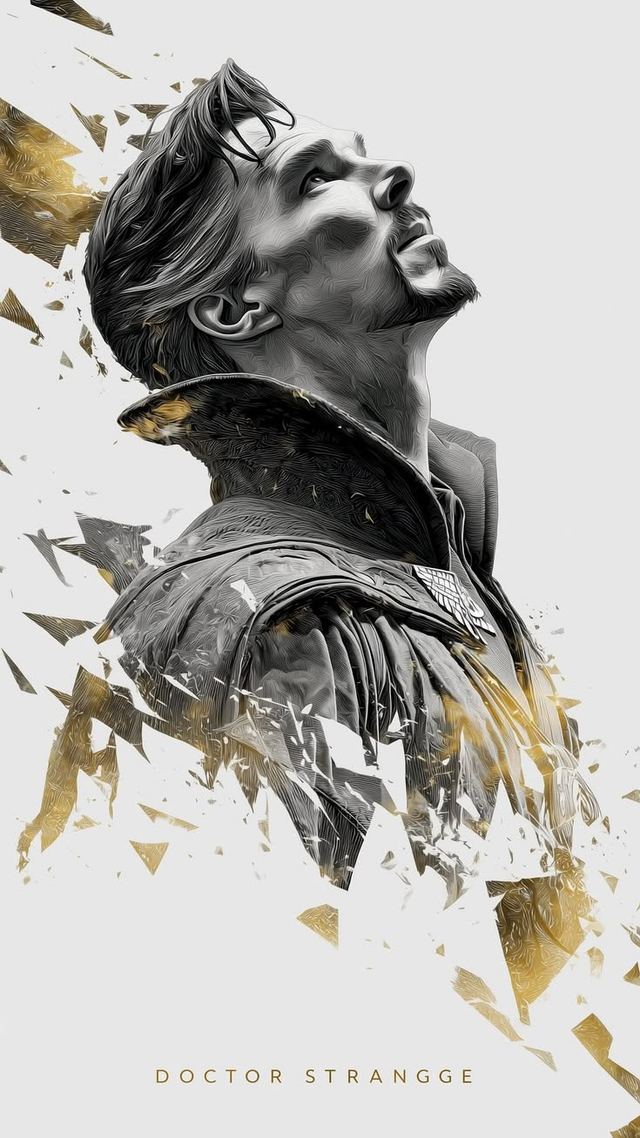
Doctor Strange
Stephen Vincent Strange
Catching up on the MCU? See where this fits on our full timeline.
Read next
How The Infinity Stones Actually Work, According To The Comics And The Films
Six singularities, one set of rules, and a film franchise that quietly rewrote half of them. A full breakdown of…
The 20 Most Powerful Marvel Characters, Ranked By What They Can Actually Do
Not who wins a fight — who rewrites the rules of the fight. Twenty characters ranked on scale of authority, from…

Sling Rings And The Mirror Dimension: How Doctor Strange's Magic Actually Works
Marvel's magic system has more rules than it gets credit for. We break down sling rings, the Mirror Dimension, the…