Sylvie Killed the Man Holding the Multiverse Together. Doomsday Might Be Her Bill to Pay.
Everyone blames Loki's restructuring for what might go wrong in Doomsday. This theory starts one step earlier, with the sword Sylvie already swung.
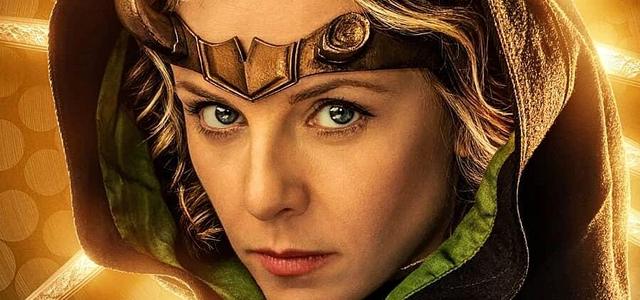
Every theory in this batch, this one included, tends to start the clock at Loki's season 2 finale — the Loom destroyed, Yggdrasil formed, one god left holding everything together. That's the visible ending. It isn't where the crisis actually starts. Before any of that, Loki's variant counterpart Sylvie drove a blade into He Who Remains and killed him, on purpose, fully warned about what it would unleash. Loki spent the rest of the season managing what she started. If Avengers: Doomsday's 'existential' stakes trace back far enough, this theory argues, they trace back to her sword, not his throne.
What He Who Remains Actually Warned Them About
Strip this down to only what the show confirms. He Who Remains offers Loki and Sylvie a choice at the end of season 1: let him keep managing the Sacred Timeline alone, or kill him and risk unleashing every variant of himself across an unpoliced multiverse — a war he frames as inevitable, not hypothetical. Sylvie kills him anyway, driven by a need for vengeance the show never asks the audience to fully condemn. That choice is the actual inciting incident for everything that follows — including the version of Kang who eventually complicates the franchise, and every event in Loki season 2. Loki doesn't cause the crisis in the finale. He inherits one Sylvie already set in motion a full season earlier.
Where Sylvie Actually Ends Up
Season 1 leaves her stranded at the End of Time, alone, having gotten exactly what she wanted and nothing resembling peace from it. Season 2 barely revisits her directly — the finale belongs to Loki's choice, not hers. And Avengers: Doomsday's marketing, cast lists, and Hall H reel, per everything reported so far, haven't mentioned her at all. Not confirmed present. Not confirmed absent. Simply unaddressed, in a franchise that has otherwise been extremely willing to bring back even minor multiverse-adjacent characters.
An Absence That's Louder the More You Think About It
A studio this deep into a multiverse saga doesn't usually forget the person who started it. That's the gap this theory sits in. If Doomsday is genuinely building toward stakes described as 'existential' — an entire mode of the multiverse's existence in question, not just a fight — the character whose one irreversible choice created that mode in the first place is a strange person to leave completely off the marketing.
Loki got the ending. Sylvie got the consequence. Doomsday might finally be asking who was supposed to get the bill.
The Theory: Her Choice Is the Real Root Cause
Here's the actual claim, clearly speculative: reframe Doomsday's crisis not as something Loki's stewardship caused, but as something Sylvie's killing made structurally possible, with Loki's Yggdrasil merely the shape the aftermath eventually took. He Who Remains wasn't wrong that killing him would unleash something — the show just chose to resolve that 'something' through Loki's heroism rather than show the war play out. A theory worth taking seriously: that war didn't fail to happen. It happened slowly, off-screen, in a form nobody's named yet, and Doctor Doom is what it looks like once it's had years to develop somewhere Loki's attention wasn't.
This connects naturally to this site's own paradox theory about Loki's origin branch — both pieces treat Loki's stewardship as something built on top of an unstable foundation rather than a clean fix. This theory just moves the crack one step further back, to the sword Sylvie was warned not to swing and swung anyway.
| Event | Status |
|---|---|
| Sylvie kills He Who Remains after an explicit warning about unleashing multiversal war | Confirmed — Loki season 1 finale |
| Loki spends season 2 managing the direct fallout, ending in the Yggdrasil restructuring | Confirmed — Loki season 2 |
| Sylvie has not appeared in any confirmed Avengers: Doomsday casting or marketing | Confirmed, by omission |
| Sylvie's choice, not Loki's stewardship, is the true root cause of Doomsday's crisis | Theory |
| Doom represents a delayed, evolved form of the war He Who Remains warned about | Theory |
What Would Confirm or Kill This Theory
- Confirms it: Sylvie appears anywhere in the finished film, especially in a scene that directly references her killing of He Who Remains as consequential.
- Confirms it: dialogue frames the current crisis as something that began before Loki's finale, rather than as a result of his stewardship.
- Confirms it: Doom's backstory or motivation is tied, even loosely, to the multiversal instability He Who Remains predicted.
- Kills it: Sylvie is confirmed entirely absent from the film with no reference to her at all, and the story treats Loki's ending as the clean, sufficient resolution it appeared to be.
- Kills it: He Who Remains' warning about a coming war is never revisited or connected to Doomsday's actual plot mechanics.
This isn't a theory that Sylvie is secretly the villain, or even that she appears in the film at all — it may turn out she genuinely doesn't. It's a theory about where the story's clock actually starts. Loki's ending gave the multiverse a caretaker. It never claimed to give it a clean slate. Whether Avengers: Doomsday remembers that the person who broke the old system in the first place still exists somewhere, unaddressed, is the open question this theory is built on.
Frequently asked
Is Sylvie confirmed to appear in Avengers: Doomsday?
What did Sylvie actually do at the end of Loki season 1?
Does this theory blame Loki for Doomsday's crisis instead of Sylvie?
Is this theory saying Doctor Doom is connected to He Who Remains?
Could Sylvie simply not be part of this story at all?
Characters in this story
Catching up on the MCU? See where this fits on our full timeline.
Read next
Loki's Bootstrap Paradox: Did Saving the Multiverse Erase the Moment That Created Him?
Loki's entire arc began with a branch he created inside Endgame's 2012 heist. If restructuring the multiverse…
Loki Season 2 Ending Explained: The God Of Stories, The Broken Loom And What Loki Actually Became
Loki does not fix the Temporal Loom. He destroys it and replaces it with himself. Here is what the God of Stories…
Where Did the Council of Kangs Go? Six Theories for Marvel's Abandoned Endgame
A coliseum of thousands of Kangs was set up as the Multiverse Saga's final boss. Then Marvel pivoted to Doom. Six…