Doom vs Thanos vs Kang: Which Franchise Villain Marvel Actually Got Right
One landed, one collapsed, and one arrives in December. A structural comparison of Marvel's three franchise-defining antagonists and what each one demands from a film.
Marvel has now attempted the franchise-spanning villain three times. Thanos worked, took eleven years to build, and remains the benchmark. Kang was announced as the successor and never arrived in any meaningful sense. Doctor Doom is on deck for Avengers: Doomsday on 18 December 2026, with Robert Downey Jr. under the mask and the Russo brothers directing. This is a structural comparison — not a power-scaling exercise, but an assessment of what each of these characters demands from a story and whether the films can supply it.
The Three Models
| Thanos | Kang | Doctor Doom | |
|---|---|---|---|
| What he wants | To correct the universe by subtraction | To pre-empt every version of himself | To rule, correctly, permanently |
| Source of threat | The Infinity Stones | Infinite variants across time | Preparation and refusal to lose |
| Structural problem | Needs six MacGuffins collected before he means anything | Every defeat is meaningless because another one exists | Cannot be legally touched, which is a feature |
| Build time required | Eleven years and eighteen films | A series, a film, and no coherent through-line | One trailer and a comics reputation, so far |
| Best on-screen showing | Infinity War, start to finish | He Who Remains in Loki season one | To be determined, 18 December 2026 |
| Fatal weakness as a concept | The philosophy does not survive scrutiny | Multiplicity destroys stakes | Writers who make him a generic tyrant |
Thanos: The One That Worked, And Why
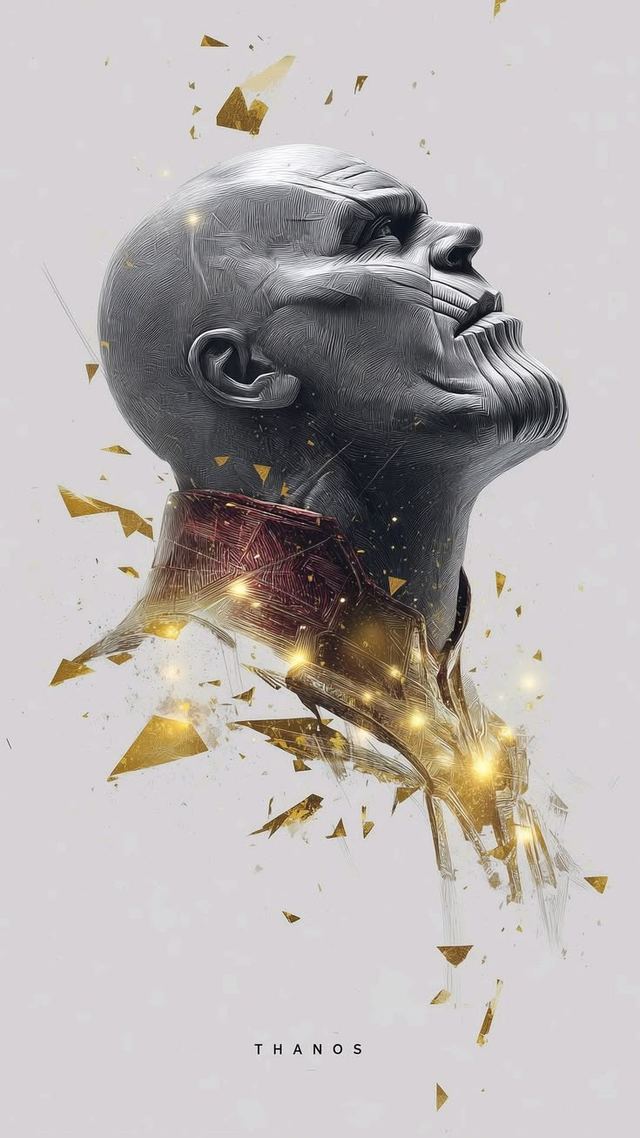
The Thanos build is the most patient piece of franchise architecture in blockbuster history and it succeeded for a reason people often miss. It was not the cameos. It was that Infinity War restructured itself around him — he has the protagonist's arc, the emotional climax, and the victory. Everything before that was setup; the film itself is where the character was actually created.
The cost was that his reasoning does not hold, which we go through in detail in our breakdown of the philosophy. But structurally he gave Marvel exactly what it needed: a single body, a single goal, a clear win condition, and a countdown. Six stones is a progress bar. Audiences can follow a progress bar for a decade.
Kang: The One That Collapsed
Kang failed for reasons that were visible on paper before a frame was shot. The character's defining trait — that he exists as infinite variants across infinite timelines — is a stakes solvent. If defeating one Kang accomplishes nothing because there are countless others, then no confrontation carries weight, and the audience learns very quickly not to invest in any given fight.
- Loki season one introduced He Who Remains, a variant played with genuine strangeness, then killed him in the same episode. It remains far and away the best use of the concept.
- Quantumania then made a Kang variant the antagonist of a small-scale comedy franchise, which mismatched tone and scale in both directions and produced Marvel's weakest reviewed film of Phase 5.
- The Council of Kangs, introduced in that film's mid-credits scene, made the variant problem explicit rather than solving it — hundreds of identical threats reduce each individual one to a foot soldier.
- Marvel subsequently repositioned the whole saga around Doom. The circumstances are widely reported; the studio has never issued a full explanation, and we are not going to speculate about one.
Thanos had a progress bar. Kang had a photocopier. Only one of those generates tension.
Doom: What He Needs To Land
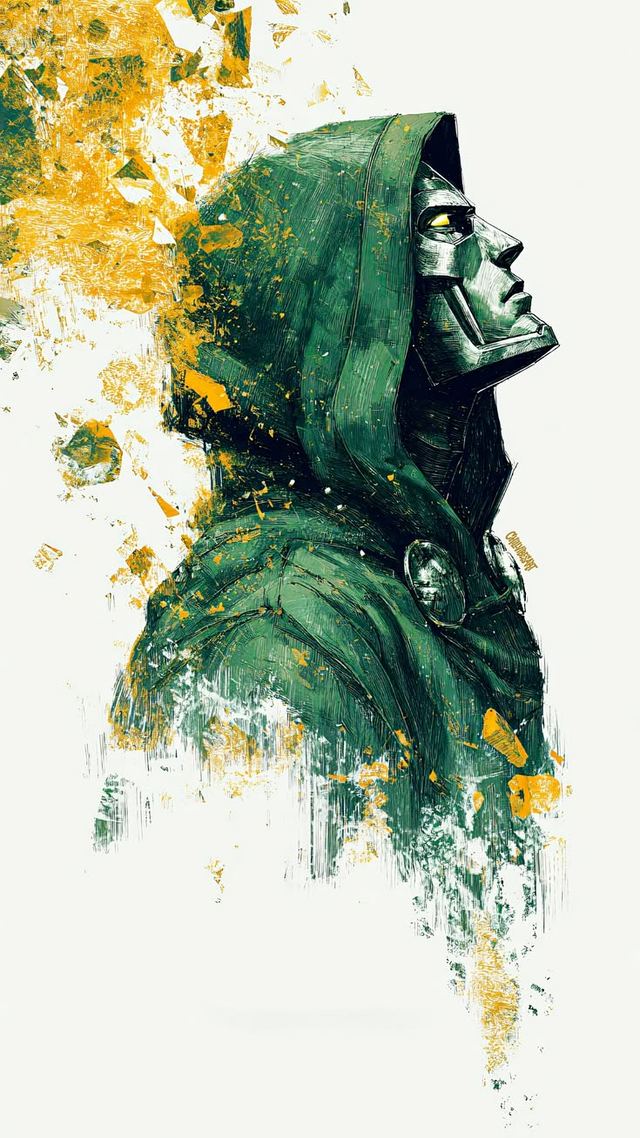
Doom is a different proposition from either, and the differences cut both ways. He has no innate powers, which means he cannot be sold on spectacle alone. He has no MacGuffin, which means there is no countdown. What he has instead is a fully formed personality, sixty-four years of consistent characterisation, and a stated position that is genuinely hard to refute — that the world would be measurably better governed by its most competent person, and that everyone objecting is simply protecting a worse status quo.
Four things have to be true for the film to work.
- He has to be right about something. A Doom who is simply a tyrant is a Doom who does not function. The comics repeatedly concede that Latveria is well run, and any adaptation that drops this loses the discomfort that makes him interesting.
- He has to be preparation rather than power. Doom's threat is that he has already thought of this. If the film wins him fights through energy blasts, it has made a generic armoured villain.
- He has to have a personal stake. The Fantastic Four cast is confirmed, which means Reed Richards is available — and Doom without a Reed to be measured against is a monarch without a mirror. The origin, which we cover in full detail here, runs entirely on that relationship.
- The theatricality has to be played straight. The third person, the cloak, the announcements. Played ironically, it collapses. Played sincerely, it is terrifying.
The Comics Precedent Nobody Should Ignore
There is a reason Marvel's marketing has been circling One World Under Doom, the 2025 event in which Doom rules Earth openly and with broad consent. In the comics, Doom winning is not a doomsday scenario in the conventional sense — crime falls, disease is addressed, wars stop. The horror is what people give up to get it. That is a far more sophisticated engine than a purple man with a glove, and it is available on the shelf right now. We break the whole event down in our explainer.
The Ranking, With Reasons
- Doctor Doom — the highest ceiling by a distance and the only one of the three whose argument survives a second viewing. Also the highest floor to clear, because a badly written Doom is worse than a badly written Thanos.
- Thanos — the proven model. Superb execution over a shaky philosophical foundation, and still the standard every subsequent Marvel villain is measured against.
- Kang — a great character concept for a limited series and a structurally impossible one for a saga. He Who Remains was excellent. Everything built on top of him was not.
Doomsday arrives on 18 December 2026 with a confirmed thirty-name ensemble and a logline about heroes from three distinct universes, followed by Avengers: Secret Wars on 17 December 2027, where RDJ remains the only publicly confirmed cast member. Feige has framed Secret Wars as the end of the Multiverse Saga and a franchise reset. That is a lot of weight for one man in a mask — but of the three, he is the only one built to carry it.
Frequently asked
Why did Marvel replace Kang with Doctor Doom?
Is Doctor Doom more powerful than Thanos?
Will Kang appear in Avengers: Doomsday?
What is the confirmed release date for Avengers: Doomsday?
Characters in this story
Catching up on the MCU? See where this fits on our full timeline.
Read next
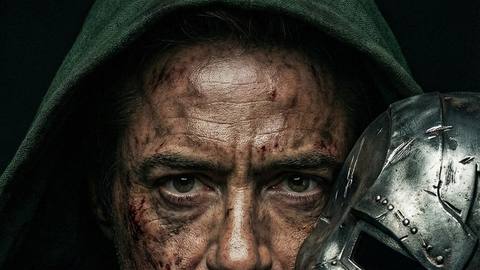
Doctor Doom Doesn't Need Loki's Power — He Just Needs to Plan Better
The popular theory says Doom stole Loki's god-power in some offscreen confrontation. Here's the less flashy, more…
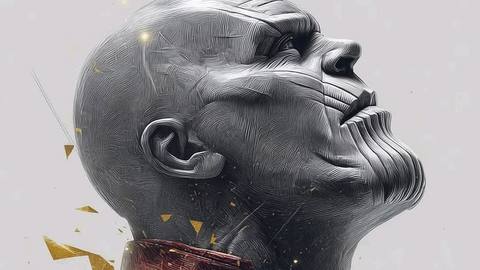
Thanos's Philosophy, And Why It Falls Apart Under Ten Seconds Of Thought
The MCU sold Thanos as a villain with a point. He is not. Here is exactly where the argument breaks, and why the…
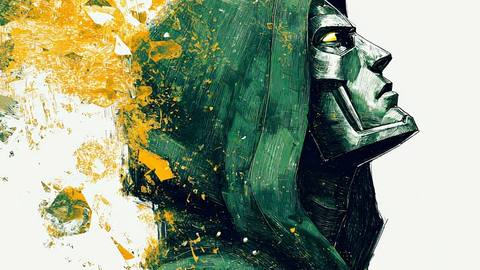
How Victor Von Doom Became Doctor Doom: The Origin, Beat By Beat
A dead mother, a scarred face, and one refusal to check his own work. The complete origin of Marvel's greatest…