How Symbiotes Actually Bond, And What Really Kills Them
Fire and sound are the famous weaknesses and they are only half the story. A full breakdown of symbiote biology, bonding rules and the god who made them.
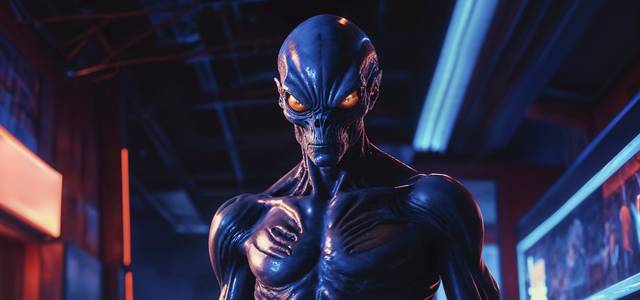
Symbiotes are the most misunderstood biology in Marvel, mostly because the two things everyone knows about them — fire and sound — are true, incomplete, and considerably less interesting than the actual rules.
With Your Friendly Neighborhood Spider-Man introducing Venom in its second season this autumn, it is a good moment to get the mechanics straight.
What A Symbiote Is
The Klyntar are a species of amorphous extraterrestrial organisms that require a host to survive long-term. That much has been consistent since 1984. What changed everything was Donny Cates' 2018 run, which established their origin.
- Knull, a god predating light itself, created the symbiotes as a living weapon — an army of darkness given form. This retroactively reframes every symbiote story published before it.
- The Klyntar as a civilisation are not inherently evil. They developed a philosophy of noble bonding, seeking worthy hosts and forming genuine partnerships. Knull's original corruption is the deviation, not the norm.
- A symbiote's personality is substantially shaped by its previous hosts. This is the single most important rule in symbiote writing and it explains almost everything about Venom's behaviour.
- They are not liquid and not fabric. The correct model is a distributed organism that occupies the host's body at the cellular level, which is why removal is genuinely dangerous.
The Bonding Process
Bonding is not possession and it is not clothing. It is a mutual biological integration with three distinct stages, and each stage is progressively harder to reverse.
- Contact and adaptation. The symbiote assesses the host's biochemistry and adapts to it. Rejection is easy at this stage and mostly voluntary.
- Integration. The symbiote weaves into the host's nervous system and musculature, granting enhanced strength, durability, shapeshifting and a shared awareness. Separation now causes physical trauma to both parties.
- Dependency. Extended bonding creates chemical dependency in the host — the symbiote produces a neurochemical response the host's body stops making for itself. This is why Peter Parker suffers withdrawal after rejecting the suit, and it is the most under-adapted part of the mythology on screen.
- Inheritance. Once the bond ends, the symbiote carries the host's traits forward. Venom is aggressive partly because it spent formative time with Peter and then with Eddie Brock, and Carnage is what happens when a symbiote's first real host is a serial killer.
That last rule is why Cletus Kasady's symbiote is so much worse than its parent. It is not a stronger organism — it is one that learned from a worse teacher.
What Actually Kills A Symbiote
Here is where the common knowledge needs correcting. Sonics and fire are real vulnerabilities and they are not the whole list, and one of them has been substantially walked back.
| Vector | Effect | Reliability | Notes |
|---|---|---|---|
| Intense sonic frequency | Disrupts cohesion, forces separation | High but adaptable | Symbiotes build resistance after exposure |
| Extreme heat and flame | Damages the organism directly | High | Most consistent weakness across all eras |
| Anti-Venom's antibodies | Cures the bond permanently | Absolute | The only true hard counter |
| Host death | Symbiote survives, seeks a new host | Not a kill | Common misconception |
| Extreme cold | Slows but does not kill | Low | Frequently misremembered as lethal |
| Knull's will | Direct control or dissolution | Absolute | The god override; nothing resists it |
| Separation trauma | Kills the host, not the symbiote | Variable | The bond protects the symbiote first |
Anti-Venom is the genuinely interesting entry. Created when Eddie Brock's residual symbiote traces merged with the Venom Cure, it does not fight symbiotes — it cures the bond, removing the organism cleanly and immunising the host. It is the only reliable hard counter in the canon and it works on diseases and toxins too, which the character used to considerable effect.
The Adaptation Rule
The most important and most often forgotten mechanic: symbiotes learn. Exposure to a weakness builds resistance to it, which means the sonic-and-fire playbook works exactly once per organism.
- Venom has demonstrated substantial sonic resistance in later comics after repeated exposure, which is why fights that used to be won with a church bell no longer are.
- This is a deliberate escalation device, and it is also why the Klyntar are genuinely terrifying at scale — an invasion force that patches its own vulnerabilities in real time.
- It also cuts the other way. A symbiote separated from its host for too long degrades, and one that has bonded to a chemically incompatible host can sicken.
- The King in Black event demonstrated the ceiling: Knull can override any symbiote's will remotely, which makes every one of them a potential sleeper agent.
Sonics and fire work once. After that the symbiote has met them, and it does not forget.
The Screen Versions Diverge Sharply
The film symbiotes run on noticeably different rules from the comics, and the differences are worth naming rather than smoothing over.
- Sony's Venom films establish oxygen as toxic to symbiotes, which has no comics basis and is essentially an original constraint invented for the first film.
- The films largely skip the dependency stage, treating the bond as a relationship rather than an addiction. The comics treat withdrawal as a genuine medical event.
- The black suit's origin in Secret Wars (1984) came from a fan-submitted costume design, which means Marvel's most successful modern villain began as reader mail — a detail we cover in our ranking of the best Spider-Man suits.
- Your Friendly Neighborhood Spider-Man introduces Venom in its second season this autumn alongside Gwen Stacy, which will be the first animated MCU-adjacent take on the bond.
Why Knull Changes The Threat Assessment
Before 2018, symbiotes were a Spider-Man problem. After Cates, they are a cosmic extinction vector, and that reclassification is why Knull tops our ranking of Marvel's most dangerous cosmic entities.
- Every symbiote in existence is a potential remote-controlled asset, which means the species is a distributed weapons platform rather than a set of individual monsters.
- The counter established in King in Black is light at extreme intensity — specifically the Enigma Force and comparable cosmic energies, not conventional fire.
- Toxin, Agony and the other Life Foundation offspring inherit the same vulnerability to the override, regardless of how heroic their hosts are.
- None of this has reached the MCU. Marvel has confirmed no Knull plans and any claim otherwise is unverified scooper chatter.
For where the species sits on the wider threat board, see the most dangerous cosmic entities ranked, and for the animated slate handling them next, every Marvel Disney+ series ranked.
Frequently asked
How do symbiotes bond with a host?
What kills a symbiote?
Are symbiotes evil?
Is Knull coming to the MCU?
Characters in this story
Catching up on the MCU? See where this fits on our full timeline.
Read next
The Best Spider-Man Suits Ever Designed, Ranked
Sixty years of costume design, ranked on silhouette, storytelling and whether the suit says anything at all. The…
The 10 Most Dangerous Cosmic Entities In Marvel, Ranked By Threat
Power and danger are different measurements. These ten cosmic beings are ranked on how much damage they will…
Every Marvel Disney+ Series Ranked, From Secret Invasion To X-Men 97
Eighteen shows, one wildly inconsistent streaming era. We rank Marvel television on execution rather than ambition…