David vs Goliath: The Tank-Throw Shot Fans Want From Hulk vs Spider-Man
No leak, no scoop, no set report — just an image fans refuse to let go of. Hulk, a tank, a Manhattan street, and one teenager who cannot afford a single hit.

Hulk vs Spider-Man is a wish, not a rumour, and this piece is going to treat it as one from the first line. Nobody has reported a fight. No scooper has described a set, a plate shot or a stunt day. What exists instead is an image — the Hulk tearing a military tank off a Manhattan street and hurling it end over end at a teenager in red and blue — and fans have drawn it, animated it, storyboarded it and described it often enough to turn it into a standing request.
The one confirmed piece of this is Mark Ruffalo's casting in Spider-Man: Brand New Day, which opens on 31 July 2026 under Destin Daniel Cretton. That is the whole of it. No fight has been announced. No tank has been announced. No confrontation between the two characters has been announced, reported or hinted at by anyone at Marvel Studios, and the official synopsis gestures only at an unspecified “invisible” villain.
So the interesting question is not whether it is happening. It is why this particular shot, out of every possible Hulk image, has such a grip on people — and what putting it on a screen would actually cost.
Why It Is Always A Tank
Fan art is a decent proxy for what an audience wants, because it is unconstrained by schedule, budget and the opinions of a visual effects supervisor. Ask people to imagine the Hulk in a Spider-Man film and they do not draw a wrestling match. They draw a thrown vehicle, and nine times in ten the vehicle is military.
The choice is not arbitrary. The tank is doing several jobs at once, and it does all of them without a line of dialogue.
- Known mass. Everyone has a rough sense that a main battle tank weighs somewhere north of sixty tonnes. A thrown car is a stunt. A thrown tank is a physics violation.
- A readable silhouette. Even in motion blur, at the far end of a street, a tank reads instantly. Generic rubble does not.
- It implies a story that has already gone wrong. A tank on a Manhattan street means the army was there first, which means somebody already tried the sensible option and it failed.
- It sets the scale gap in a single frame. The object being thrown is larger than the person it is thrown at. No exposition required.
- It is a callback. Hulk against the military is the character's oldest recurring image, running from the 1962 Lee and Kirby debut through decades of covers to the Culver University sequence in The Incredible Hulk.
A thrown car is a stunt. A thrown tank is a physics violation — and that gap is the entire appeal.
There is one more reason, and it is the least discussed. A tank is the only prop that makes Spider-Man look correctly sized. Put him next to the Hulk and he reads as small. Put him at the receiving end of an incoming armoured vehicle and he reads as impossible, which is a much better use of the character.
Hulk vs Spider-Man In The Comics: Sixty Years Of A Bad Matchup
The pairing has a long paper trail, and the useful thing about it is how consistently writers have solved the same problem. Spider-Man cannot hurt the Hulk. That is not a debate; it has been the starting assumption since the first meeting. What changes from decade to decade is what the story does with it.
1964: the first meeting is a cave, not a city
Amazing Spider-Man #14, July 1964 — an issue better remembered for introducing the Green Goblin — detours Peter out to New Mexico and drops him into a cave with the Hulk. Steve Ditko stages it as an escape rather than a fight. Peter's objective for the entire sequence is to get out of the room, which is roughly where the matchup has stayed ever since.
1973: the two-parter that set the template
Amazing Spider-Man #119 and #120, Gerry Conway writing with Gil Kane pencilling, sent Peter to Canada and gave the pairing its definitive version. The fight runs across two issues and Spider-Man never lands a meaningful blow. He redirects, he stalls, he tries to steer the Hulk away from people, and the emotional weight of it is entirely about a kid trying to manage something that could kill him by accident.
It is still the best argument for why the matchup works. A fight where one side cannot win generates more tension than a trade, because every connection is fatal.
1984: Secret Wars quantifies the gap
Marvel's original Secret Wars put both characters on the same alien planet and handed the Hulk the most cited feat in his publishing history — holding up a mountain range, put at somewhere in the region of a hundred and fifty billion tonnes, while the rest of the heroes worked underneath it. Spider-Man was one of the people standing under that mountain. The same series is where Peter picked up the black costume that eventually became Venom, which is why it remains a fixture on any ranking of his suits.
The team-up decades, and what they settled
Across Marvel Team-Up, Peter David's long Hulk run and the Manhattan siege of 2007's World War Hulk, the pairing has been rerun in every register from farce to horror. The resolution is almost never combat. It is Peter stalling, or finding the one person who can reach Banner.
Why Spider-Man Is One Of The Few Heroes Who Survives The Encounter
Most of the Marvel roster has exactly two options against the Hulk: absorb it or leave. Thor trades. Iron Man builds a suit specifically for the occasion. Spider-Man's power set is one of the very few that offers a third answer, and it is worth being precise about why.
The spider-sense is a dodge engine
Peter's precognitive warning fires before conscious thought — a fractional heads-up on incoming danger that his body acts on before his brain catches up. Against an opponent who only has to connect once, early warning is worth more than durability. Armour buys you one hit. Prescience buys you every hit you never take.
This is also the reason the tank throw is dramatically correct rather than just loud. A thrown vehicle is a large, slow, telegraphed attack. It is exactly the kind of thing a spider-sense is built to solve, which means the shot fans keep drawing is a showcase for Peter's power rather than a humiliation of it.
Webbing is a physics prop, not a restraint
Nobody who writes this matchup well uses webbing to hold the Hulk. Its tensile strength matters as a redirection tool — anchor a line, change your own vector, swing a falling object off somebody's head, blind him for two seconds. Peter's webbing is a way of borrowing momentum from the environment, and against an opponent generating far more momentum than you can, borrowing is the only viable economy.
He is not trying to win
The reason Peter survives narratively is that his win condition is different from everyone else's. He is not trying to put the Hulk down. He is trying to get everyone off the street. That objective is achievable by a fast, sticky, precognitive teenager in a way that beating the Hulk never will be, and it is why a Hulk vs Spider-Man sequence does not have to end with anyone losing.
What The MCU Has Actually Shown About Hulk's Throwing Feats
Set the comics aside, because the films have their own record and it is narrower than people remember. Here is what has actually been on screen.
| Film | The feat | What it tells you |
|---|---|---|
| The Incredible Hulk (2008) | Tears through armoured vehicles at Culver University, then splits a police car in half and wears the halves as gloves against the Abomination | Vehicles are props to him, not obstacles — but he uses them close-range, not as projectiles |
| The Avengers (2012) | Stops a Chitauri Leviathan with one punch, catches a falling Iron Man, slams Loki through a floor | The signature heavy work is aimed at people and creatures, not thrown hardware |
| Avengers: Age of Ultron (2015) | The Johannesburg fight against the Hulkbuster, staged largely through architecture | When the film wants scale it spends it on buildings, which is the more reusable asset |
| Thor: Ragnarok (2017) | The Sakaar arena, and slamming Thor by the leg as a deliberate callback | Mass used as comic timing rather than as threat |
| Avengers: Infinity War (2018) | Loses to Thanos in the opening minutes, then refuses to come out for the rest of the film | The ceiling, established explicitly |
| Avengers: Endgame (2019) | Smart Hulk — same output, temperament rebuilt, and the arm that wears the nano gauntlet | The version of the character the MCU currently has |
Two things fall out of that. The first is that the MCU's heavy-object work is nearly always incidental — the Hulk throws whatever is to hand while doing something else. A deliberate, aimed throw of a specific vehicle at a specific target down a specific street is a shot the films have essentially never staged.
The second is temperament, and it is the part the wish-list quietly skips. As of Endgame and She-Hulk, Bruce Banner is Smart Hulk: the same power output with the brake reattached, a man who gives interviews and owns a beach house. The image fans are drawing requires a Hulk who is not the Hulk this franchise currently has. Any “Savage Hulk returns” premise attached to Ruffalo's casting is fan speculation with no announcement behind it.
The Practical Reasons A Shot Like That Is Expensive And Rare
Assume for a moment the story problem is solved. The shot is still one of the most costly things a Marvel film can attempt, for reasons that have nothing to do with ambition.
- It is a fully synthetic frame. Ruffalo performs in a motion-capture suit and the Hulk has been an entirely digital character in every appearance. Spider-Man in full motion is routinely a digital double. Add a digital tank and a digital street and there is no photography left in the shot at all.
- Destruction does not come out of a library. Sixty-plus tonnes leaving the ground and landing on asphalt is a rigid-body simulation with a chain of secondary simulations hanging off it — deformation, shed track links, dust, glass, the parked cars it lands among.
- Simulations do not re-time cheaply. Shift the throw by a few frames in the edit and the whole thing runs again. That is why big destruction beats get locked early, and why late changes are the note producers dread most.
- You cannot cheat it practically. A real tank on a closed Manhattan street is an insurance conversation before it is a filmmaking one, and the sense of mass you need to sell is precisely the thing a real vehicle cannot do safely.
- The environment is its own budget line. A city street means glass, signage, traffic and crowd work, all of which has to survive being stared at while something enormous flies through it.
- Studios ration these deliberately. A tentpole gets a handful of genuine poster shots, chosen at the storyboard stage to serve the story's biggest turn — not to serve the most popular piece of fan art.
None of that makes the shot impossible. Marvel has paid for harder frames, several of them in the last decade. What it makes it is a decision taken years in advance, in previsualisation, long before anybody on the internet started drawing it. Whatever is in Brand New Day was locked, rendered and delivered months ago.
Hulk vs Spider-Man: What Is Confirmed And What Is Wished For
This is the most useful block on the page, because everything above is analysis and the line between record and wish gets blurry fast once a piece of fan art goes around enough times.
| Claim | Status |
|---|---|
| Mark Ruffalo appears in Spider-Man: Brand New Day | Confirmed — casting announced |
| Brand New Day releases 31 July 2026, directed by Destin Daniel Cretton | Confirmed |
| The official synopsis references an unspecified “invisible” villain | Confirmed — synopsis wording, with no further detail attached |
| Bruce Banner is Smart Hulk as of Endgame and She-Hulk | Confirmed — canon |
| Spider-Man and the Hulk fought across Amazing Spider-Man #119–120 in 1973 | Confirmed — comics, not an MCU plot description |
| Hulk and Spider-Man fight in Brand New Day, or in any announced film | Unconfirmed — nothing announced, nothing reported, no studio comment |
| A tank is thrown, in any MCU film, at anyone | Theory — pure fan wish, with no announcement behind it |
| A Savage Hulk returns, or Banner loses control again | Unconfirmed — fan speculation, no announcement |
| How large Ruffalo's role is, or how much screen time he has | Unannounced — Marvel has said nothing beyond the casting |
| Sadie Sink's and Tramell Tillman's roles in the film | Officially unannounced — every identification circulating is rumour |
Every row in the top half is a matter of record. Everything the tank shot requires sits in the bottom half, and there is no honest way to move a row upward before Marvel does it.
Why The Wish Surfaced Now
Timing explains this better than any theory does. Ruffalo's casting is the first time in the Holland era that the Hulk has been formally attached to a Spider-Man film, and a solo picture is the only place on the current slate where two characters could plausibly get a sustained scene to themselves. An Avengers film with a thirty-name cast cannot give anyone eight uninterrupted minutes on a street.
There is also a genuinely interesting story sitting under the wish, and it is not the fight. The Peter Parker going into this film is one nobody remembers — the spell at the end of No Way Home erased him from the world, MJ and Ned included. Any encounter with an Avenger is now a first meeting with a stranger who has no idea what he has already given up. That is the scene worth wanting, and it does not need a tank.
Add an official synopsis that offers only an unspecified invisible villain and you have a vacuum four days before release. Vacuums get filled with the most cinematic thing anyone can picture, which is how a piece of fan art becomes something people half-remember as a rumour.
So take this for exactly what it is. Fans are not predicting the tank throw; they are asking for it, and asking is allowed. For everything else circulating this week, the confirmed-versus-rumour ledger is the more useful page. The most likely outcome remains the least dramatic one: Ruffalo turns up, Smart Hulk behaves like a colleague, and the best shot in the film is one nobody on the internet thought to draw.
Frequently asked
Do Hulk and Spider-Man fight in Spider-Man: Brand New Day?
Has the Hulk ever thrown a tank in the MCU?
How does Spider-Man survive fighting the Hulk?
What is the best Hulk vs Spider-Man comic?
Is the Hulk still Smart Hulk in the MCU?
Why would a shot like the tank throw be expensive to film?
Characters in this story
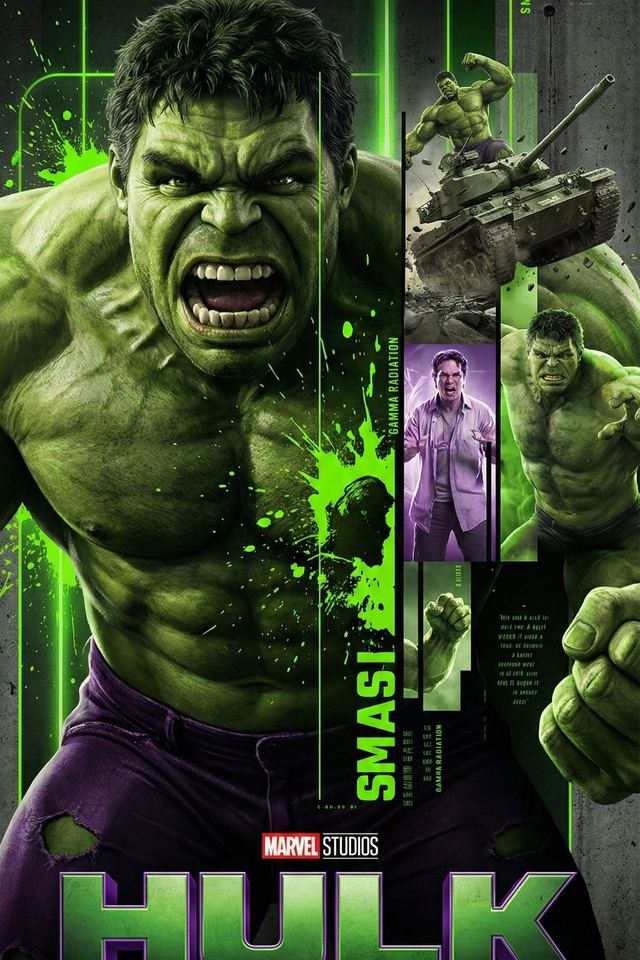
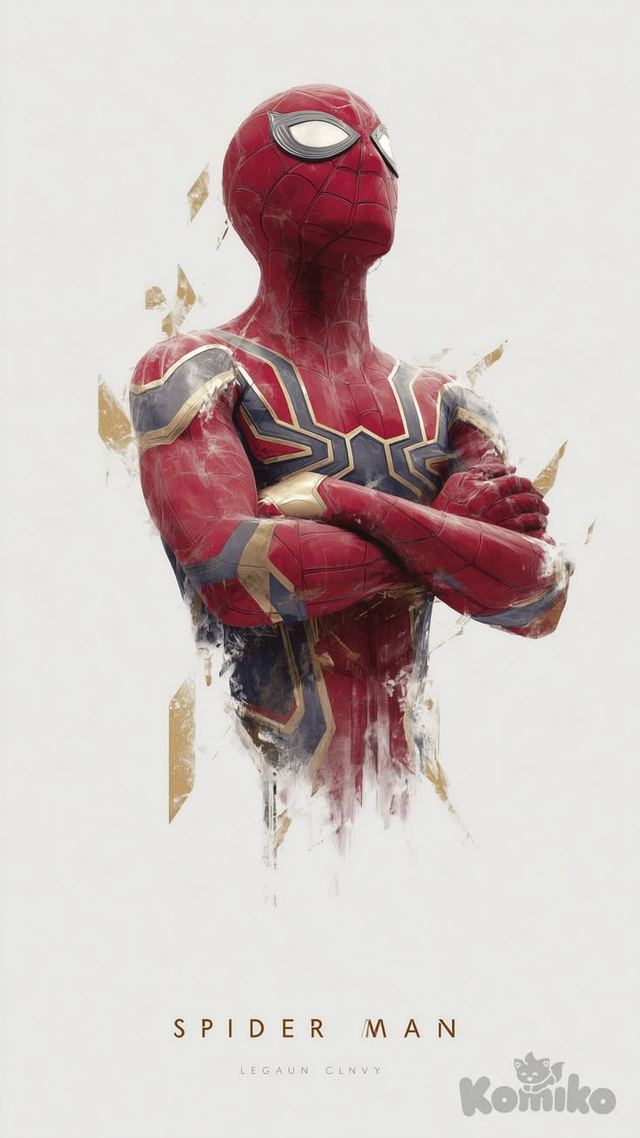

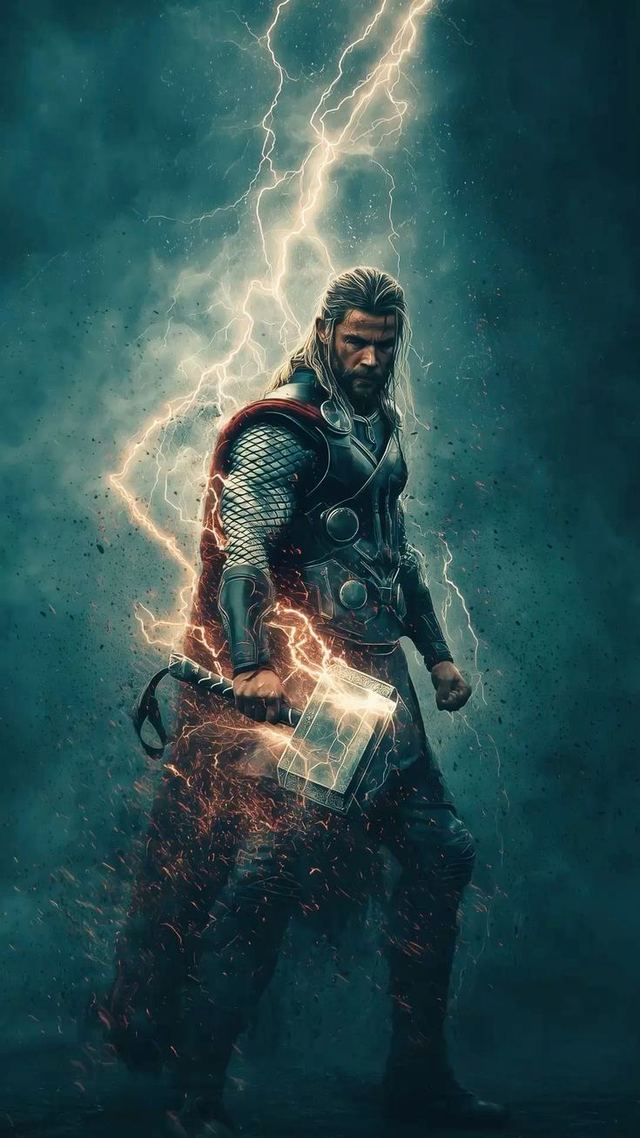
Catching up on the MCU? See where this fits on our full timeline.
Read next
Smart Hulk Is Gone: The Savage Hulk Theory Behind Ruffalo's Return
Mark Ruffalo really is in Brand New Day. The rest — a broken merge, an unleashed Hulk, a teenager with no backup…
A Battle Of Mentors: Frank Castle, Bruce Banner And The Fight For Peter
Jon Bernthal's Punisher and Mark Ruffalo's Banner are both confirmed for Brand New Day. The theory that the film is…

The Gamma Collision: The Theory That Peter's Fix Unleashes The Hulk
Peter is a scientist with a magical problem and no wizard left to call. The lab-accident theory is seductive — and…