Why Killmonger Is Still The MCU's Best-Written Villain
Eight years and twenty films later, nobody has beaten him. A close reading of why Erik Killmonger works when almost every other MCU antagonist does not.
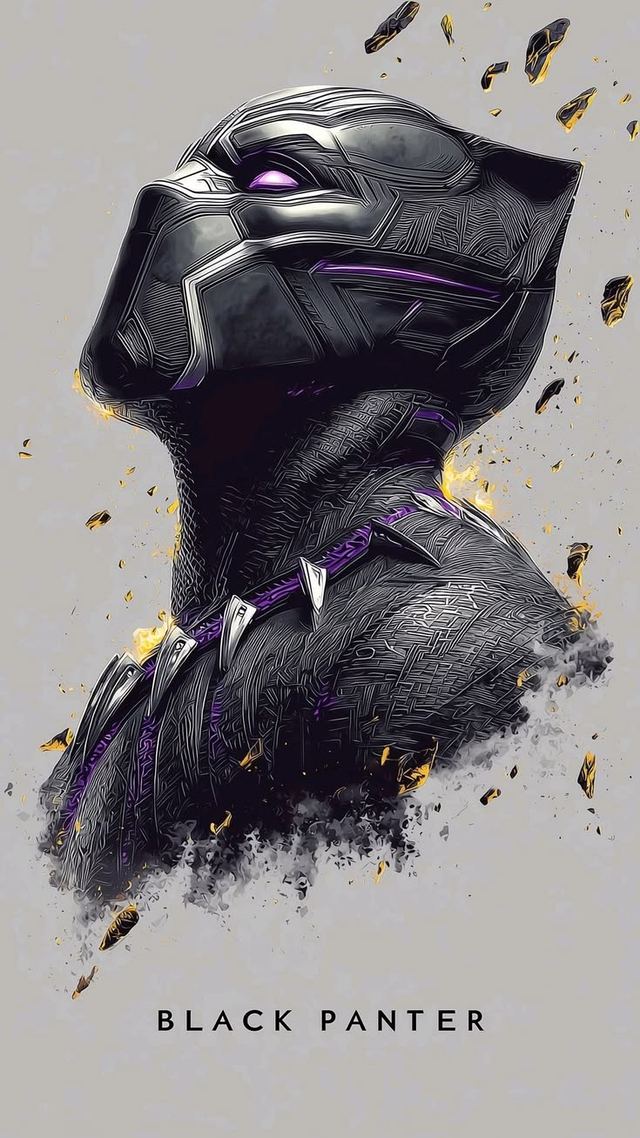
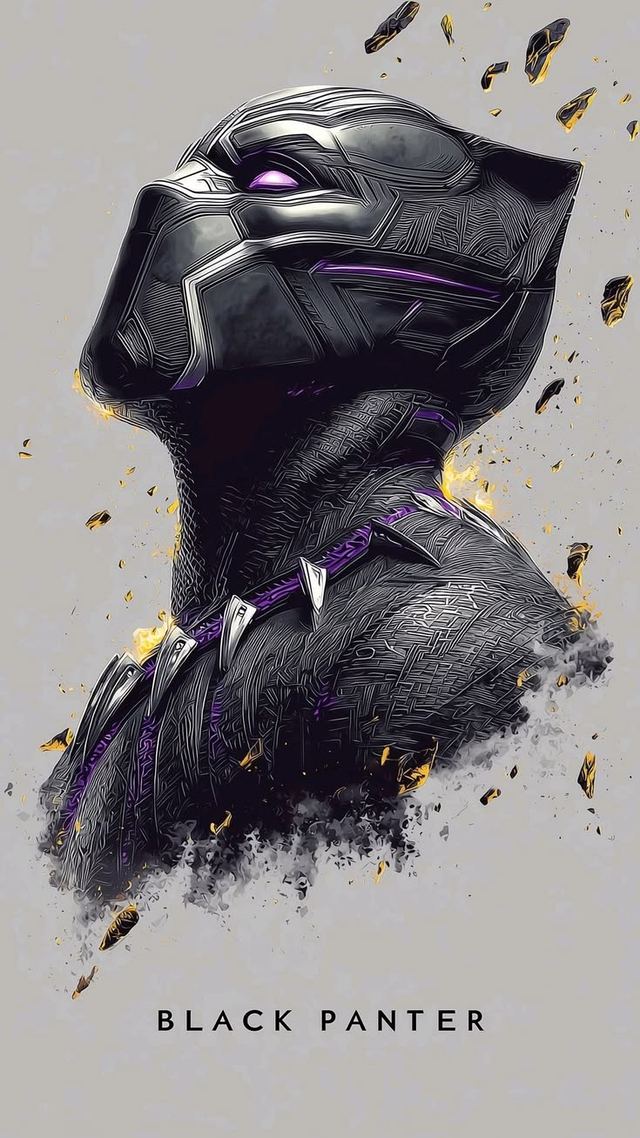
The MCU has a villain problem and has had one since 2008. The standard diagnosis — that Marvel villains are disposable because the heroes have to win — is only half right. The real issue is structural: most MCU antagonists are built as obstacles rather than arguments. Black Panther is the film that solved it, and eight years on, Erik Stevens is still the high-water mark. This is a breakdown of exactly why.
The Argument He Is Making
Killmonger's position is stated plainly and never softened. Wakanda is the most technologically advanced nation on Earth. It watched the transatlantic slave trade, colonialism, and two centuries of the African diaspora's suffering from behind a cloaking shield, and did nothing, because intervention would have exposed it. His conclusion is that this makes Wakanda complicit, and that its resources belong to the people it abandoned.
That is not a villain's rationalisation. It is a coherent political critique, and the film knows it. The most important thing Black Panther does is have T'Challa lose the argument. Not the fight — the argument. By the third act, T'Challa has conceded the diagnosis and is only disputing the method, and the film's ending implements a version of Killmonger's policy under a different name.
Killmonger is the only MCU villain whose stated goals become government policy in the closing scene. He does not lose the debate. He loses the duel.
Motive, Method, And Where They Diverge
| Element | Killmonger | The typical MCU antagonist |
|---|---|---|
| Motive | A specific grievance with a named perpetrator: his father was killed by the king, and he was left in Oakland. | Abstract — conquest, revenge on a mentor, or a fixed ideology stated once. |
| Method | Constitutional. He wins the throne through Wakanda's own legal challenge ritual. | Assault on a city, a beam into the sky, an army of interchangeable soldiers. |
| Relationship to hero | Cousin. Same family, same claim, different upbringing. | Dark mirror in costume design only. |
| What the film argues | That inherited institutions can be moral failures even when run by good people. | That the hero should punch harder. |
| Ending | Refuses treatment and chooses death over imprisonment, in one of the franchise's few genuinely earned final lines. | Falls off something. |
The method is where the writing is sharpest. Killmonger does not attack Wakanda. He walks in, presents a legitimate bloodline claim, and defeats the king in a ritual combat the nation's own laws sanctify. He becomes the rightful ruler. Everything horrifying he then does is legal. The film has quietly made its point about institutions before a single Dora Milaje raises a spear.
The Craft Underneath
- He is given a childhood. The opening scene of the film is his origin, positioned before the hero's, which tells the audience whose story this actually is.
- His trauma is physical and visible. The ritual scarring — one mark per kill — makes his history readable on his body without a line of exposition.
- He is allowed to be right in front of characters who matter. Nakia agrees with substantial parts of his critique. So, eventually, does Shuri.
- His anger is specific rather than general. He is not angry at the world; he is angry at one uncle, one country, and one decision made in one apartment in 1992.
- He is charming. Michael B. Jordan plays him with an ease that makes the violence land harder, because the audience has already started liking him.
Where The Writing Still Fails Him
An honest analysis has to concede the weak points, because the film has two. First, the script arms him with a plan — shipping vibranium weapons to operatives worldwide — that tips him from a revolutionary into an arms dealer at precisely the moment the audience is most sympathetic. It is a safety valve, and it is visible as one. Marvel needed him to become punchable, so the script made him punchable.
Second, his treatment of Linda is a character assassination in a single beat. Killing a partner to make a tactical point is the oldest shorthand in the genre for irredeemable, and it is deployed here specifically to close off the audience's sympathy in advance. A braver film would have made us keep liking him all the way to the end.
Why Nobody Has Matched It Since
Infinity War gave Thanos enormous screen time and a philosophy, but the philosophy does not survive scrutiny — we take that apart in our full analysis. Kang was positioned as a franchise-spanning threat and then dissolved into variants before any single version accumulated a point of view. The Phase 5 films kept reaching for the Killmonger template — a villain with a legitimate grievance — and kept flinching, most visibly in Brave New World, where the antagonist's motivation is stated, acknowledged as reasonable, and then simply dropped.
Thunderbolts* came closest by making its antagonist an internal condition rather than a person, which sidesteps the problem rather than solving it. And Avengers: Doomsday arrives in December with a villain who, in the source material, has the strongest claim to being right of any of them. Whether the Russos let Doom hold that position is the question we raise in our comparison of Marvel's three franchise antagonists.
The Test
Here is a simple diagnostic for any superhero villain. Write down what they want in one sentence. Then ask whether a reasonable person in the audience could agree with it. If the answer is no, the villain is an obstacle. If the answer is yes, the film has to actually engage, and engagement is where good writing lives.
Killmonger wants a nation with the power to help to stop pretending it cannot. That passes the test. Eight years later, it is still the only MCU villain motivation that does.
Frequently asked
Is Killmonger a villain or an antihero?
Does Killmonger appear anywhere else in the MCU?
Why do so many people call Killmonger the best MCU villain?
Was Killmonger created for the film?
Characters in this story

Catching up on the MCU? See where this fits on our full timeline.
Read next
Thanos's Philosophy, And Why It Falls Apart Under Ten Seconds Of Thought
The MCU sold Thanos as a villain with a point. He is not. Here is exactly where the argument breaks, and why the…
Doom vs Thanos vs Kang: Which Franchise Villain Marvel Actually Got Right
One landed, one collapsed, and one arrives in December. A structural comparison of Marvel's three…
What Makes Kingpin Work Where Every Other Crime Boss Fails
Superhero fiction is littered with forgettable mob bosses. Wilson Fisk is not one of them. A close look at the…