From Protégé To Outcast: Peter's Secret Identity Is An Avengers Problem
A masked stranger who will not give his name is a liability on a team that runs on trust. After No Way Home, that is exactly what Peter is to everyone.
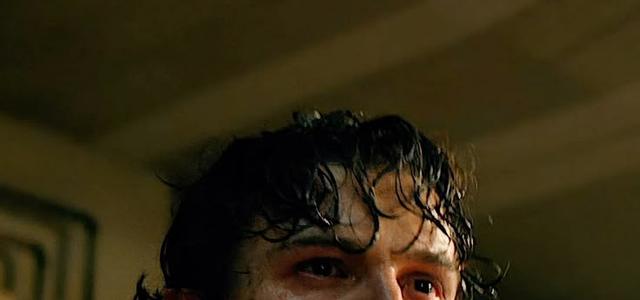
The Peter Parker secret identity problem has always been framed as Peter's problem — the lie he tells the people he loves, the reason he cannot go to his own school reunion. Since the end of No Way Home it is worth turning the question round and asking what that secret costs everybody else. Specifically, what it would cost the Avengers, on the kind of mission where being wrong about a person gets people killed.
Because the Peter walking around the MCU right now is not a hero with a secret. He is a masked stranger with no name, no address, no employer, no verifiable history and nobody alive who remembers meeting him. Whatever else that is, it is a security profile — and on a team that has been infiltrated, impersonated and blackmailed more than once, it is a poor one.
What follows is character analysis and fan theorising rather than reporting. No studio has said any of this, Marvel Studios has never commented on Spider-Man's standing with the Avengers, and whether he turns up in Avengers: Doomsday at all remains unconfirmed.
The Peter Parker Secret Identity After No Way Home Is A Different Thing Entirely
It is worth being precise about what the spell at the end of No Way Home actually did, because the loose version of it gets this wrong. It did not erase Spider-Man. The world still knows there is someone in a spider suit swinging between buildings in Manhattan and stopping muggings. What it erased is Peter Parker — the name, the face, the address, the aunt, the two best friends, and every single person who knew the two were the same.
That is not a secret identity in the ordinary sense. A secret identity is a fact known to a few and hidden from the many. Peter's is known to nobody at all. There is no inner circle, no confidant, no fail-safe, no envelope with a lawyer. The information exists in exactly one head, and that head is inside the mask.
The cruellest detail is already on film. In the final battle of Endgame, Peter runs the gauntlet over to Captain America and says, “Hi, I'm Peter Parker.” It is the one moment in the whole run where he volunteers his real name to an Avenger, unprompted, on a battlefield, because it finally seemed safe to. That memory no longer exists anywhere. Steve Rogers met a boy called Peter Parker once and has nowhere left to file it.
Run The Mission: What An Anonymous Team-Mate Actually Costs
The Peter Parker secret identity stops being a romantic burden the moment you put it on an operational checklist. Strip the sentiment out and imagine somebody assembling a roster for something on the scale of the last two Avengers films. The file on Spider-Man contains a mask, an approximate borough and a set of powers nobody has ever independently measured. Here is what it does not contain.
- Next of kin. If he goes down, there is nobody to notify. May Parker is dead. MJ and Ned do not know he exists. That line on the form is not blank because the paperwork is sloppy — it is blank because the world has been edited.
- A reference. Everyone else in the room can be vouched for by someone else in the room. Nobody can vouch for Peter, because vouching requires having met him, and by the terms of the spell nobody has.
- Shared history. He was on Titan. He was on the tarmac at Leipzig. He carried the Infinity Gauntlet across a battlefield. He cannot cite one second of any of it without sounding like a man reciting other people's war stories.
- A whereabouts trail. No employer, no phone contract in a real name, no badge, no known address. If something goes wrong and the question is where he was on Tuesday, there is no way for him to answer it and no way for anyone to check.
- A chain of command. Peter has never been onboarded by any organisation. Tony's field promotion aboard the Q-ship was one man's sentence in one conversation, and that man has been dead since 2023.
None of that is a knock on Peter, who has done more unpaid heroics than several names on the confirmed Doomsday cast list. It is a description of a hole where a person's institutional existence ought to be.
The verification problem is not hypothetical
This universe has already run the experiment. Secret Invasion was built on the premise that anyone you trust might be someone else wearing their face. And Peter's own recruitment by Nick Fury in Far From Home turned out to be Talos in a Fury suit — the only piece of outside recruitment he has ever received was a case of mistaken identity running in both directions at once.
In a post-Skrull, post-multiverse MCU, the first thing a competent team asks a new arrival is some version of: prove you are who you say you are. Peter cannot answer that. He cannot even reach the part where he says who he is, because he does not say.
How The MCU Has Handled Anonymity Before
Daredevil: a secret with a circle
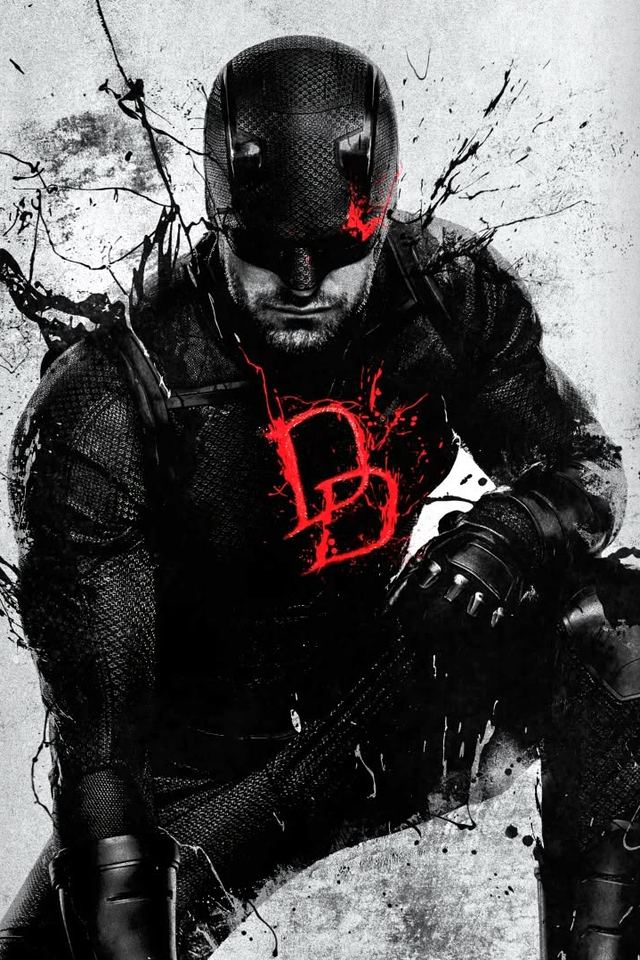
Matt Murdock is the closest comparison and the contrast is instructive. His identity is hidden from the public and known to a working group — Foggy, Karen, and, awkwardly, Wilson Fisk. He also has a law practice, a name on a door, a bar licence and a reputation anyone can look up. Daredevil: Born Again returned in March 2026 to near-perfect notices with a third season greenlit, and its entire engine is the friction between the man in the mask and the man in the courtroom. Peter has no courtroom, and no door.
Moon Knight: anonymity turned inward
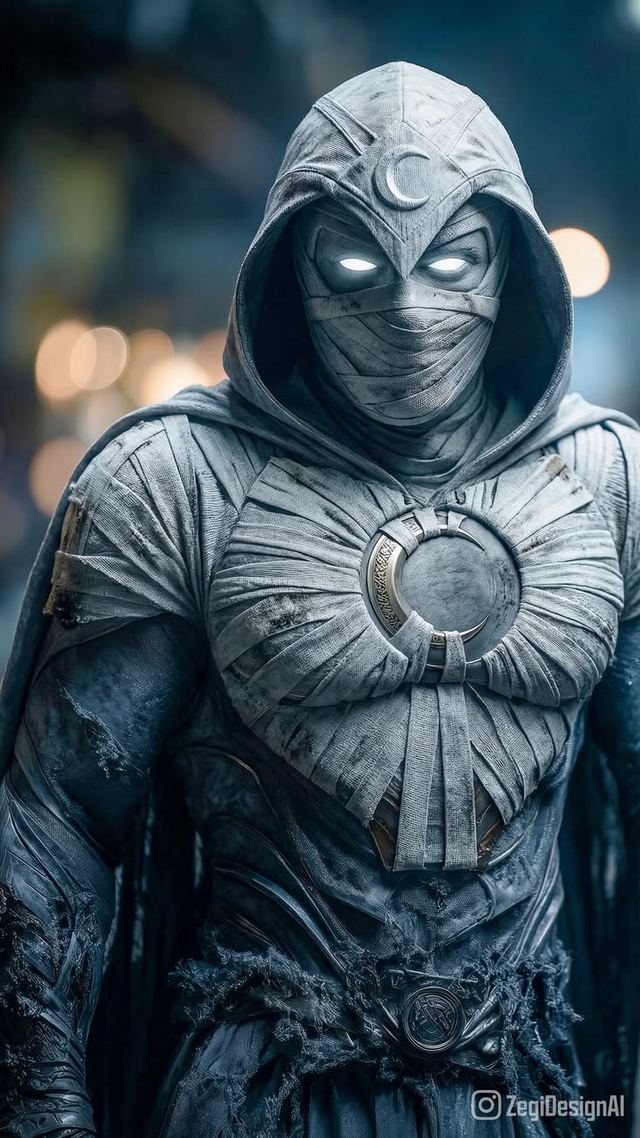
Moon Knight approached the problem from the other end — a man who cannot verify himself to himself, never mind to anybody else. But Marc Spector's fragmentation has never been a team's problem, because he has never been on a team. The MCU has not yet had to drop a genuinely unverifiable person into a command structure and ask everyone in it to live with the consequences.
The Thunderbolts: the exact opposite problem
Thunderbolts* is the sharpest counterpoint, because that group's defining trait is that everybody has a file. Yelena, Walker, Ghost, Alexei, Bucky — every one of them is a documented asset, which is precisely why Valentina could assemble them and steer them. Being known is what made them usable and what made them controllable. That the film ends by rebranding them as a New Avengers line-up by announcement rather than by vetting tells you how this franchise actually thinks about the question.
Peter is not a hero with a secret. He is a hero who has been deleted from the only records that could tell anyone a secret exists.
The Spell Protects Him And Strips Him At The Same Time
The most interesting thing about the Peter Parker secret identity as it now stands is that it was never really a choice. He did not decide to go dark. He asked Strange to make everyone forget in order to save five lives, and the price came attached to the wish.
What it buys is genuine. MJ and Ned are alive, unwatched and untargetable, precisely because nothing connects them to Spider-Man any more. Every enemy Peter makes from here has no lever to pull. In a genre whose standard third-act move is to dangle the hero's girlfriend off something, he has made himself structurally immune to it.
What it costs is the same fact seen from the other side. Every personal connection is a vulnerability, and every vulnerability is also a credential. You cannot delete the people who could be used to hurt him without also deleting the people who could speak for him. The spell did not distinguish between the two, because there is no way to.
The Counter-Case: Nobody In This Franchise Has Ever Filled In A Form
The honest weakness in all of the above is that it takes the Avengers' institutional rigour far more seriously than the films ever have. There is no vetting process in the MCU. There has never been one, at any point, for anybody.
- Thor arrived through a wormhole and was on the roster within a film, with no documentation beyond a hammer nobody else could pick up.
- Rocket is a talking raccoon with an outstanding criminal record on several planets. He fought in two Avengers films and helped run the time heist.
- Wanda and Pietro Maximoff volunteered for Hydra experiments and fought the team directly, weeks before joining it.
- Bucky Barnes was a brainwashed assassin who killed Tony Stark's parents, and stands on the New Avengers stage at the end of Thunderbolts*.
- Scott Lang was recruited into a superhero civil war by a phone call, while on house arrest, by a man he had met twice.
Set against that record, “he will not tell us his name” barely registers as an objection. Every Avengers line-up the films have assembled has been built out of whoever happened to be standing nearby when the sky opened, and the vetting has consistently amounted to one trusted person saying he is with me.
There is a second and better counter as well. Avengers: Doomsday arrives on 18 December 2026 with a confirmed cast of roughly thirty names and a logline about heroes from three distinct universes. In a room where a third of the people are from somewhere else entirely, nobody has references anyone can check. Peter's problem stops being unique the second the multiverse walks in — which may be exactly why the films have been able to leave it unaddressed for five years.
Peter Parker Secret Identity: What Is Known Versus What Is Guessed
The argument leans on real canon, which is what makes it worth having. It also stacks a fair amount of speculation on top of that canon, which is what makes the following the most useful block on the page.
| Claim | Status |
|---|---|
| Doctor Strange's spell erases Peter Parker from the world's memory at the end of No Way Home | Confirmed — canon, MJ and Ned included |
| May Parker dies in Spider-Man: No Way Home | Confirmed — canon |
| Tony Stark died in Avengers: Endgame (2019) | Confirmed — canon |
| Spider-Man: Brand New Day releases 31 July 2026, with Mark Ruffalo and Jon Bernthal in the cast | Confirmed |
| Avengers: Doomsday releases 18 December 2026, with Robert Downey Jr. as Doctor Doom | Confirmed |
| Spider-Man appears in Avengers: Doomsday | Unconfirmed — Tom Holland is not among the announced cast |
| Chris Evans returns specifically as Steve Rogers | Unconfirmed — Evans is confirmed cast, his role is not |
| The Avengers distrust Peter, or have discussed him at all | Theory — no film or series has depicted this |
| Peter's anonymity is treated as a plot obstacle in Brand New Day | Unconfirmed — the official synopsis mentions only an unnamed “invisible” villain |
The pattern is the point. Everything in the top half is a matter of record. Everything the theory needs in order to predict anything at all sits in the bottom half.
Where Brand New Day Fits Into The Argument
Spider-Man: Brand New Day opens on 31 July 2026 under Destin Daniel Cretton, with Tom Holland, Zendaya, Jacob Batalon, Sadie Sink, Jon Bernthal as the Punisher, Mark Ruffalo as Hulk, Michael Mando and Tramell Tillman. Sink's and Tillman's roles are still officially unannounced, so every identification circulating for either of them is rumour rather than reporting.
The company Peter is keeping is the tell. Bernthal's Punisher is the least institutional figure this universe has — no team, no clearance, no press conference, no interest in one. Ruffalo's Banner is an original Avenger arriving in Peter's film rather than the other way around. If you wanted to dramatise a hero the system cannot locate, you would put him beside a vigilante the system has given up on and have the Avengers come to him.
None of which tells us what the film does with any of it. The official synopsis references an unspecified invisible villain and nothing more, and whether Peter shows up in Doomsday in December is unconfirmed. This is not a prediction and should not be sold as one. It is a description of the corner the last three films have quietly painted the character into — and the reason the next one has something genuinely new to work with.
Frequently asked
Does anyone know Peter Parker's secret identity after No Way Home?
Why would Peter Parker's secret identity be a problem for the Avengers?
Is Spider-Man in Avengers: Doomsday?
How is Peter's secret identity different from Daredevil's?
Has Marvel confirmed that the Avengers do not trust Spider-Man?
Does Peter Parker still have a secret identity if nobody remembers him?
Characters in this story
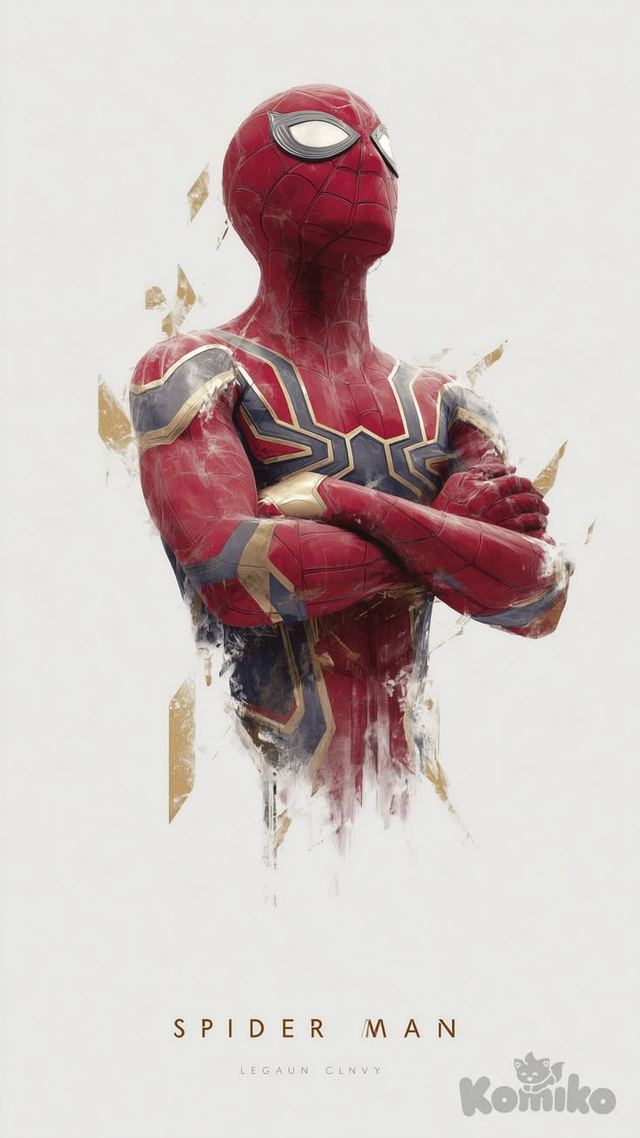
Catching up on the MCU? See where this fits on our full timeline.
Read next
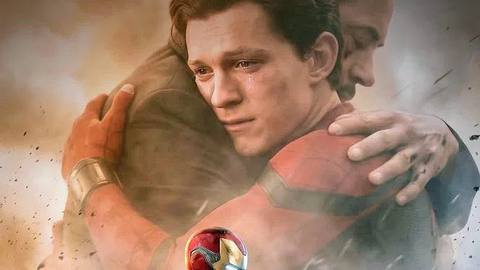
Stark's Legacy, Parker's Burden: How Tony's Death Cut Peter Loose
Every tie Peter had to the Avengers ran through Tony Stark - and No Way Home erased the witnesses. The theory that…
The Lone Avenger: The Theory That Spider-Man Turns The Team Down
The theory says Peter turns the Avengers down to stay a neighbourhood hero, and falls out with Sam Wilson and…
The Heartbreak Protocol: MJ, MIT, And The Reunion Rumours
MJ at MIT, a new city, a chance meeting on a New York street. It is a lovely theory built on a real plot point…