Character profile
Spider-Man 2099
Miguel O'Hara
A corporate geneticist who fixed himself into a monster and decided to be useful.
Biography
Miguel O'Hara is head of genetics at Alchemax, the megacorporation that owns most of Nueva York in 2099, and he is very good at a job he has stopped being able to justify. After a human test subject dies in his lab he tries to resign, gets dosed with the addictive control drug Rapture by his boss, and attempts to purge it by rewriting his own genome with a spider-DNA template — which a rival sabotages. He wakes up with talons, fangs, and no way back.
That is a genuinely different Spider-Man. Miguel has organic web-spinnerets in his forearms, retractable talons, venomous fangs and accelerated vision, and he is not friendly — he is a corporate insider with a scientist's arrogance and a grudge against the company that made him. Peter David wrote him as the flagship of Marvel's 2099 line, and Across the Spider-Verse recast him as the authoritarian centre of the multiverse: a man who has decided that canon must be enforced because he broke a universe by refusing to accept a loss.
Vital statistics
- Real name
- Miguel O'Hara
- Also known as
- Miguel O'Hara, The Spider of 2099, Spider-Man of Nueva York
- Species
- Human mutate (spliced with spider DNA)
- Place of origin
- Nueva York, 2099
- First appearance
- Spider-Man 2099 #1 (November 1992), following a preview in Amazing Spider-Man #365 (August 1992)
- Created by
- Peter David, Rick Leonardi
- Affiliations
- Alchemax, Spider-Army, Exiles, Avengers of 2099
- Groups
- Heroes Spider-Verse
Power grid
Intelligence6
Strength4
Speed4
Durability4
Energy3
Fighting4
Rated 1–7 on the classic Marvel power-grid scale.
Powers
- Organic Webbing
Spinnerets in his forearms produce webbing with a psi-strength comparable to steel cabling.
- Talons
Retractable claws on his hands and feet that let him climb by digging in rather than adhering.
- Venomous Fangs
A paralytic bite, one of the few offensive powers no other Spider-Man has.
- Enhanced Vision
He sees in near-total darkness and tracks motion far beyond human capacity.
- Accelerated Reflexes
Faster than Peter Parker, with no spider-sense to warn him — he relies on speed instead.
- Dimensional Travel
His holographic suit and later tech let him traverse the multiverse and lead the Spider-Society.
Abilities
- World-class geneticist and Alchemax executive
- Skilled improviser under pressure with a scientist's problem-solving approach
- Effective, if authoritarian, leader of multiversal operations
- Fluent in corporate politics and 2099's brutal legal environment
Weaknesses
- No spider-sense at all
- The suit's cape and holographic systems can be disabled
- Bitterness and control issues alienate allies
- Personal history with Alchemax keeps dragging him back into its orbit
Comics history
Peter David and Rick Leonardi launched Spider-Man 2099 in 1992 as the anchor of Marvel's 2099 imprint, and it outlasted almost every other title in that line because David built a real world around Miguel — corporate feudalism, religious fraud, a dying planet and a hero who is not sure he is one.
Dan Slott brought Miguel into the present day during Superior Spider-Man and Spider-Verse (2014), where he became a key member of the Spider-Army against the Inheritors. He has since led Spider-Man 2099 relaunches, appeared in Exiles, and been reinvented on screen as the leader of the Spider-Society in Across the Spider-Verse — a role that made him the most-discussed non-Peter Spider-Man of 2023.
On screen
Allies
- Lyla
- Gabriel O'Hara
- Spider-Army
- Jessica Drew
Enemies
- Alchemax
- Tyler Stone
- Morlun
- The Inheritors
Weapons & equipment
- Talons
- Organic webbing
- Venomous bite
- Holographic 2099 suit with glider cape
- Lyla holographic AI
Trivia
- Miguel is Marvel's first Latino Spider-Man, created in 1992 — nineteen years before Miles Morales.
- His webbing comes from organic spinnerets in his forearms, and his talons mean he climbs by gripping rather than sticking.
- He has no spider-sense, which Peter David used deliberately to make his fights feel more dangerous.
- Tyler Stone, the Alchemax executive who doses him with Rapture, is later revealed to be his biological father.
- Oscar Isaac's performance in Across the Spider-Verse turned a 1990s deep cut into a mainstream character almost overnight.
Famous quotes
I'm not the friendly neighbourhood anything.
You think I'm the villain? I'm the only one holding the line.
Everybody keeps calling it destiny. I call it a load-bearing wall.
Timeline
- 1992
Debuts in Spider-Man 2099 #1 after a preview in Amazing Spider-Man #365.
- 2014
Joins the Spider-Army in Spider-Verse and relocates to the present day.
- 2015
Headlines a new Spider-Man 2099 ongoing series.
- 2023
Leads the Spider-Society in Across the Spider-Verse, voiced by Oscar Isaac.
Gallery
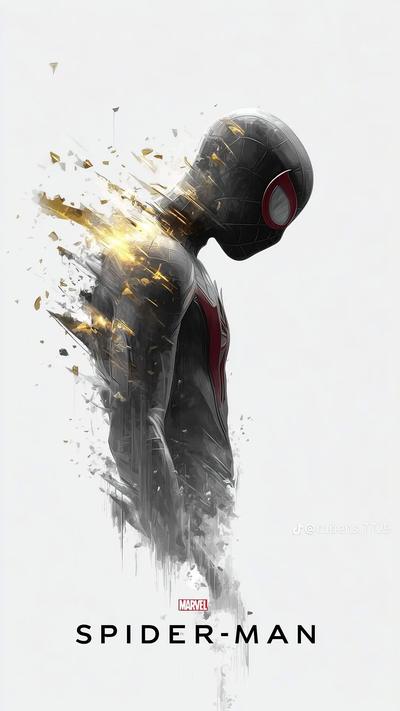

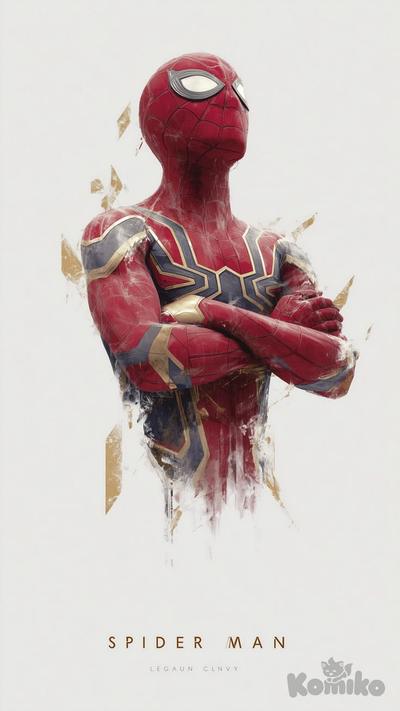


Poster art is generated from each character’s signature palette. Drop official art into assets/images/ and set the img field to swap it in.
Related characters
Miles Morales
Miles Gonzalo Morales

Spider-Gwen
Gwendolyne Maxine Stacy
Spider-Man
Peter Benjamin Parker

Silk
Cindy Moon

Scarlet Spider
Ben Reilly
Latest on Spider-Man 2099
Who's Who In The Spider-Verse: Every Major Spider Explained
There are hundreds of Spider-People across the multiverse and about nine that matter. A newcomer's map to the…
Canon Events Explained: The Spider-Verse's Rules, and Why Miles Breaks Them
Miguel O'Hara says a Spider-Man who breaks a canon event destroys a universe. Here is what the films actually…
Frequently asked
Who is Miguel O'Hara?
The Spider-Man of the year 2099 — a geneticist at the megacorporation Alchemax whose attempt to purge an addictive control drug from his system rewrote his DNA with a spider template. He debuted in Spider-Man 2099 #1 (1992), created by Peter David and Rick Leonardi.
How is Spider-Man 2099 different from Peter Parker?
He has organic web-spinnerets, retractable talons and a venomous bite, and no spider-sense at all. Temperamentally he is a corporate insider rather than a working-class kid — colder, more controlling, and considerably less interested in being liked.
Is Miguel O'Hara a villain in Across the Spider-Verse?
He is the antagonist, not a villain. His insistence on enforcing canon events comes from having destroyed an entire universe by trying to replace a dead version of himself — a genuine tragedy that makes his authoritarianism comprehensible without making it right.