Spider-Man vs Earth's Mightiest: The Temporal Collapse Manhunt Theory
A timeline coming apart, a trace that ends at Peter Parker, and a team with no good options. The theory is compelling, unconfirmed, and broken in four places.
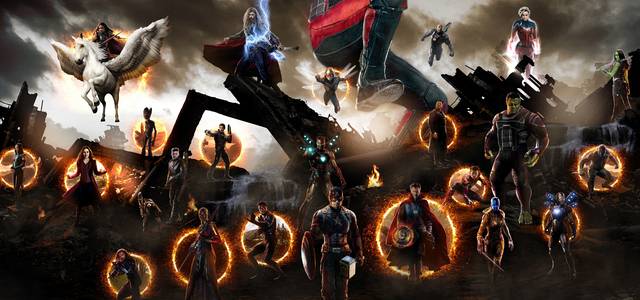
The theory that the Avengers hunt Spider-Man — not as villains, not out of malice, but because a temporal collapse traces back to Peter Parker and removing the cause is the only move left on the board — has become one of the more durable fan constructions orbiting Avengers: Doomsday. It is also, to be clear before anything else, entirely fan-made. No synopsis, no trailer, no casting announcement and no studio comment supports any part of it, and Spider-Man has not been confirmed for Avengers: Doomsday at all.
It persists anyway, and not because fans are gullible. It persists because it is a good story shape. The MCU already ran the version where Peter is drafted into a manhunt on the winning side, so the inversion writes itself. Everyone has history, everyone has a reason, and nobody has to be a villain.
So treat this as a structural exercise rather than a scoop. Who on the actually confirmed Doomsday roster would take that assignment, who would refuse it, how the old Civil War fault lines redraw themselves around it — and then, honestly, why the mechanics of the theory fall apart under the MCU's own established rules. This is speculation throughout. It is not reporting, and none of it has been announced.
What The Temporal Collapse Manhunt Theory Actually Claims
The theory arrives in a dozen slightly different forms, but the load-bearing beats are consistent. Stripped down, fans argue it runs like this.
- Something Peter did — the second spell in No Way Home is the usual candidate — leaves a fracture in the timeline rather than a clean seal.
- That fracture widens. Realities start bleeding, which is how the theory tries to explain the Doomsday logline about heroes from three distinct universes.
- Someone with the instruments to trace it — Reed Richards in most tellings, Doctor Doom in the darker ones — follows the damage back to a single point of origin, and the point of origin is a person.
- The Avengers are told the fastest way to stop the collapse is to secure that person. Nobody wants to. Everybody understands the arithmetic.
What makes it seductive is the absence of a villain. No mind control, no Skrull, no evil turn — just people who have already watched half the universe die once being handed a horrible piece of maths and told the clock is running. That is a real dramatic engine, and it is why this idea outlives most fan theories of its type.
The appeal is not that the Avengers become bad. It is that they stay good and come for him anyway.
Why The Avengers Hunt Spider-Man Theory Is A Civil War Rerun
The reason this scenario feels like something the MCU would do is that the MCU already did it, from the other end. It is worth remembering how Peter entered this world at all.
Peter's first day on the job was somebody else's manhunt
Tony Stark recruited a fifteen-year-old out of a Queens apartment and flew him to Germany to help apprehend a fugitive. Peter's debut on the world stage was as an asset in a pursuit operation, on the side with the paperwork, against a man whose actual crime was being framed. He took the job because Tony asked and because the grown-ups seemed certain.
Flip the polarity and you have this theory in a sentence. The kid conscripted into the dragnet becomes the thing at the end of it, and the people holding the net taught him the word Avenger. That is not a plot; it is an ironic structure, which is a more fragile thing.
The Accords are gone. The instinct that produced them is not
Civil War never resolved its argument, it just ran out of building. The Accords faded off-screen rather than being repealed, and the position underneath them — that enhanced people are a risk requiring supervision — was never refuted. It simply lost its loudest advocate at the end of Endgame.
A temporal collapse traced to one masked individual would be the strongest argument that position ever had. Which is why, in the theory's better tellings, the split is not between good Avengers and bad ones. It is between people who think containment buys time and people who think it costs you the one person who understands the problem.
Who On The Confirmed Doomsday Roster Would Take The Assignment
One caution first. The roughly thirty-name Doomsday cast is confirmed; what any of them are doing in the film is not. Chris Evans is confirmed to be in it and his role has never been announced. What follows is character logic applied to a cast list, not a description of scenes anyone has seen.
Sam Wilson takes it, to stop someone worse taking it
Anthony Mackie's Sam is the most plausible yes, and the yes is defensive. He has spent three projects arguing that you handle a dangerous person by being the one who reaches them first. He hunted Bucky Barnes once and spent years making up for it. He would take this assignment so that it belonged to somebody who intends to bring the kid home.
He is also the only confirmed name with any claim to speak for the institution — and he inherited a shield, not a mandate. That gap is where the interesting version of this story lives.
Yelena takes the contract and then breaks it
Florence Pugh's Yelena is the one who could actually find someone who does not want to be found, which makes her the professional choice and the least reliable one. She has already been handed a target on bad information once, in Hawkeye, and she stood down the moment the information changed. Send her after a teenager and you are betting the mission on nobody telling her the truth.
David Harbour's Alexei would treat it as a job with excellent stories attached — comic relief or the film's most tragic beat, depending on the playing.
Thor is the wrong instrument, and knows it
Chris Hemsworth's Thor does not do manhunts. He does confrontations, and his most consequential decision — going for the head, five years too late — is the MCU's cleanest lesson about solving a problem by removing the person at the centre of it. Any writer putting Thor on this detail is putting him there to argue against it.
Who Refuses, And Why The Refusal Is The Better Scene
A manhunt story is only worth telling if somebody says no. The confirmed roster is unusually well stocked with people whose entire history is an argument against this exact operation.
Bucky Barnes was the manhunt
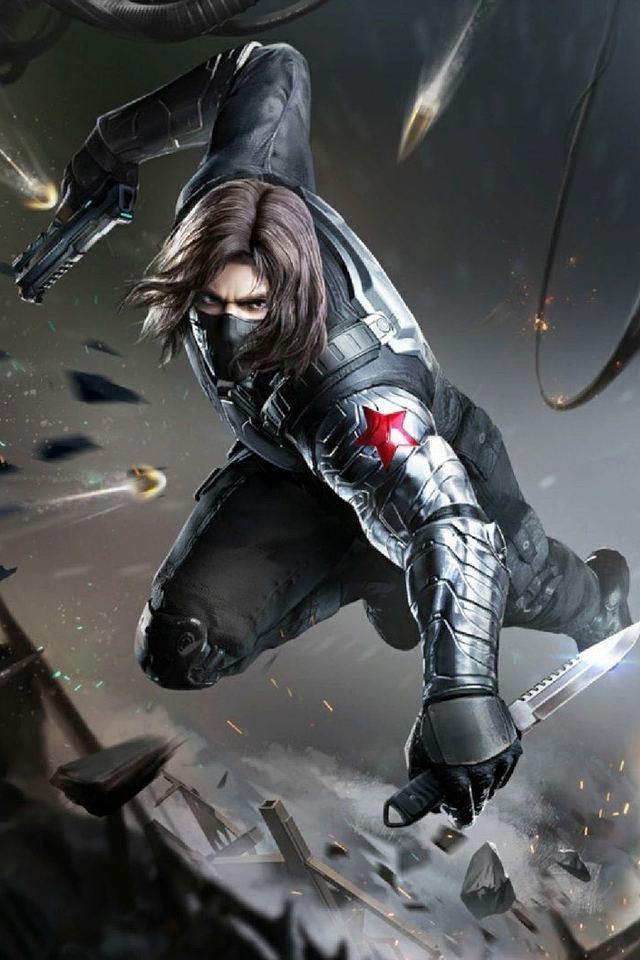
Sebastian Stan's Bucky is the categorical refusal and it is not close. He has been the man in the crosshairs of a hundred-agent international dragnet for a crime he did not commit, hunted by people who were not wrong to be frightened of him. He knows exactly what it feels like to be the correct answer to the wrong question.
His value here is not sympathy. It is that he can say, with authority nobody can argue with, that securing the dangerous individual is how you end up with the dangerous individual in a cell and the actual problem still running.
The Fantastic Four would want the cause, not the boy
Pedro Pascal, Vanessa Kirby, Ebon Moss-Bachrach and Joseph Quinn are all confirmed, and a family of explorers is the natural opposition to a containment plan. Reed's objection would be technical — you do not repair a structural fracture by detaining the person standing nearest to it. Sue's would be shorter and would end the conversation.
It is also where the theory quietly undermines itself: a team that can diagnose a temporal collapse can address it without a warrant.
Bob is the variable you do not touch
Lewis Pullman is confirmed, and if the Sentry is anywhere near an operation built on despair and impossible choices, the manhunt is not the disaster in the film. It is the thing that causes the disaster in the film. Any writer who puts him on this detail is writing a much darker story than the theory imagines.
The Case Against The Avengers Hunt Spider-Man Theory
Here is where honesty is more useful than enthusiasm. The theory is emotionally coherent and mechanically broken, and it breaks in at least four separate places.
The MCU has never shown time working the way this needs
Endgame spent a whole scene demolishing the version of time travel this theory depends on. Changing the past does not rewrite the present; it branches a new reality, and the branch does not reach back. Under those rules, a fracture caused by Peter cannot propagate backwards into a collapse that eats his own timeline, and removing him afterwards would not un-branch anything already split.
The Doomsday logline is about heroes from three distinct universes, which is a multiverse premise, not a time-travel one. Those are different mechanisms in the MCU and this theory keeps quietly swapping between them. The three-universes framing points at incursion, not at a temporal unravelling traced to one boy in Queens.
The TVA exists specifically to handle this
The largest hole is the simplest. The MCU has already introduced an entire organisation whose sole function is detecting, tracing and resolving temporal anomalies, complete with the instrumentation to find a branch point and the institutional authority to act on it. If a temporal collapse were traceable to a single person, the story has a body whose whole job that is, and it is not the Avengers.
Any version of this theory has to explain why nobody calls them. The honest answer is that it was built backwards from a wanted-poster image rather than forwards from the MCU's rules.
A manhunt requires an institution, and there isn't one
This is the part fans skip. Manhunts are not vibes. They need a warrant, a jurisdiction, a chain of command and a signature that carries legal weight. In Civil War all of that existed: a hundred and seventeen countries, a ratified accord, an authority Ross could invoke on camera.
Post-Endgame, the Avengers are not an institution. The compound is rubble, the Accords framework has no dramatised successor, and the team most recently branded as Avengers got there through political theatre rather than any charter. There is no desk this order comes from — and answering that by inventing a government sponsor stops it being an Avengers manhunt at all.
And there is no name to put on the warrant
The quietest problem is the funniest. The spell at the end of No Way Home erased Peter Parker from the memory of every living person. You cannot issue a bulletin for a man nobody can remember, cross-reference an address nobody has, or interview a family that no longer knows he exists. The Avengers could hunt Spider-Man. They could not hunt Peter Parker, because as far as the world is concerned there is no such person.
Confirmed Versus Guessed
This is the part of the page worth trusting. Everything above is argument; everything in this table is either documented or explicitly not.
| Claim | Status |
|---|---|
| Avengers: Doomsday releases 18 December 2026 | Confirmed. Moved from its original 1 May 2026 date. |
| Robert Downey Jr. plays Doctor Doom | Confirmed. He is not playing Tony Stark. |
| Chris Evans is in the film | Confirmed as cast. His role has never been announced. |
| Spider-Man appears in Avengers: Doomsday | Unconfirmed. Tom Holland is not among the announced cast names. |
| The Avengers hunt Spider-Man in any announced project | Pure fan theory. No synopsis, trailer or casting supports it. |
| A temporal collapse is the Doomsday plot | Unconfirmed. The only official framing is heroes from three distinct universes. |
| Peter's identity is erased from the world's memory | Confirmed. Canon since No Way Home in 2021. |
| Tony Stark is alive to give the order | No. He died in Endgame in 2019. |
It is also worth noting how thin the ground under the whole conversation is. Spider-Man's presence in Doomsday is itself unconfirmed, so a theory about what the Avengers do to him is speculation stacked on speculation. Marvel Studios has not commented on any of it.
The Smaller Version That Would Actually Work
Strip out the physics and something usable survives. The interesting story was never the manhunt; it was the disagreement about whether to have one. That does not require a temporal collapse, a warrant, or a single frame of anyone chasing anybody across a rooftop.
A version that respects the MCU's own rules looks roughly like this.
- The anomaly is real and the trace is ambiguous — it points at a masked figure, not a named person, because nobody can name him.
- The disagreement is about method, not morality: contain the variable, or find him and ask.
- The people arguing for containment are the ones who lost the most in 2018, which makes them sympathetic rather than wrong.
- Doom benefits from the argument regardless of who wins it, because a fractured Avengers is the cheapest weapon on the board.
- Nobody hunts anybody. Somebody knocks on a door.
That last point is where the RDJ casting does interesting work, and where the Doom-and-Tony question stops being a gimmick. A Peter cornered by people wearing the authority Tony used to carry, by a man wearing Tony's face, is a scene with real weight — and it needs no temporal collapse to justify it. Every version of this team has fractured over this argument before, which is the only reliable part of the theory.
Until Marvel says otherwise, the Avengers hunt Spider-Man theory remains what it has always been: fan speculation with nothing official underneath it, about a character not confirmed for the film in the first place.
Frequently asked
Is Spider-Man in Avengers: Doomsday?
Do the Avengers hunt Spider-Man in Avengers: Doomsday?
Could one person cause a temporal collapse in the MCU?
Why would the Avengers turn on Spider-Man in this theory?
Is Tony Stark back in Avengers: Doomsday?
When does Avengers: Doomsday come out?
Characters in this story

Catching up on the MCU? See where this fits on our full timeline.
Read next
Accidental Villain: The Theory That Makes Spider-Man Public Enemy No. 1
Peter never turns. He just leaves a door open and something enormous walks through it. Inside the fan theory that…
The Catalyst For War: When Do The Avengers Start Seeing Peter As A Threat?
There is a test buried in the MCU for the moment allies stop calling you a hero. We built it out, ran Peter Parker…
Love In The Collateral Damage: Why Keeping MJ Away May Pull Her Back In
Peter erased himself from MJ's memory to keep her safe. The theory: in this trilogy, being kept at a distance has…