The Guardian's Brand New Day Review Isn't a Rave — It's Zendaya Saving a Semi-Cronenberg Spider-Man
The Guardian's Peter Bradshaw isn't writing a rave. He credits Zendaya with saving the film, calls its body-horror turn "the David Cronenberg zone," and closes by demanding a more radical reboot.

Peter Bradshaw's Guardian review of Spider-Man: Brand New Day landed this week making two arguments that have nothing to do with each other and everything to do with each other. The first: Zendaya is the reason this film works as well as it does. The second: Tom Holland's Spider-Man has wandered into body-horror territory so specific that Bradshaw reaches for David Cronenberg to describe it. Read together, they add up to the sharpest, least accommodating review Brand New Day has received — at a moment when most of the coverage around it is repeating a much friendlier line.
That friendlier line isn't wrong, exactly. Brand New Day opened at 93% on Rotten Tomatoes from 43 counted reviews and has since settled closer to 90–91% as the sample has grown past 70 — a score movement we've tracked in detail — which genuinely does make it the best-reviewed MCU film since Spider-Man: No Way Home in 2021. Metacritic, which weighs each review rather than just counting thumbs-up, sits cooler at 71 — still solid, but a reminder that the Rotten Tomatoes number measures agreement, not intensity. Bradshaw's review doesn't contradict either number. It's a reminder of what an aggregate score flattens: a real range of critical opinion, with his piece sitting at the demanding end of it rather than the middle.
There's no star rating attached to the Guardian review, so the read has to come from the argument itself rather than a number out of five. And the argument really is a two-parter: an actor doing more than her role strictly requires, and a franchise finally trying something strange with its own hero's body — which the review treats as both the best idea in the film and proof that Marvel still hasn't made the bigger swing this story needs.
Zendaya Is Doing More Than the Role Requires
Bradshaw doesn't hedge the compliment. He writes that Zendaya's performance as Michelle Jones-Watson "rescues it from silliness," crediting her with a "naturally relaxed style and self-possession" that reads, in his description, as a "grownup acting presence" next to everything happening around her. That's a specific kind of praise — not "she's good in this," but "she is operating on a different register than the film she's in."
The line that will actually land inside Marvel's marketing meetings is the direct comparison: Bradshaw writes that she outshines the film generally, "including Holland." That's not a throwaway aside in a review of Holland's fourth outing as the character — it's a claim about where the film's real center of gravity sits. Brand New Day is supposed to be Parker's story, told in a genuinely new era for the character, and Bradshaw is arguing its best performance belongs to someone playing opposite him.
The Semi-Cronenberg Turn — And Why It's Not a Throwaway Line
The stranger half of the review is the one that gives it its edge. Bradshaw writes that Parker experiences "unprecedented new physical and mental health issues" in this film — plural, and pointedly not the usual superhero-movie language of powers "growing" or "awakening." He describes it as pushing the film into "what I can only describe as the David Cronenberg zone," a reference that means one specific thing in film criticism: body horror, transformation as something happening to a body against its will, not a costume upgrade.
That's not Bradshaw reading in a subtext that isn't there. It lines up almost exactly with Marvel's own official synopsis, which describes Parker's powers undergoing "a surprising and potentially dangerous evolution" as he anonymously protects New York four years after the world forgot he exists. Put the studio's careful marketing language next to the critic's blunter one and the gap nearly closes: Marvel is selling a mystery — "surprising... evolution" — and Bradshaw is naming what he actually saw inside it. On the evidence of one of the more skeptical reviews on record, it's also the most interesting swing the film takes: a Spider-Man movie willing to make its hero's own body a source of dread rather than a power fantasy.
It's also, if Bradshaw is right, a bigger risk than it looks from the marketing copy. Body horror asks an audience raised on suit-up power fantasies to sit with the idea that a hero's own powers might be doing him harm — a very different emotional contract than "he got stronger." Whether Cretton's film commits to that all the way through or treats it as one unsettling stretch inside a more conventional structure is exactly the kind of question one careful adjective in a synopsis can't answer. It may be why Bradshaw spends more of the review on this than on anything except Zendaya.
So Is He Right? Weighing the Review Against the Field
Where the review earns its bite is in what surrounds those two arguments. Bradshaw is unimpressed by the connective tissue — "generic deja vu overfamiliarity" is how he describes the film's less inspired MCU-formula stretches — and he singles out the web-swinging physics as unconvincing and the destruction sequences as repetitive, the sense of having watched buildings fall this exact way before.
- Praised: Zendaya's "naturally relaxed style and self-possession"
- Praised: the body-horror swerve into "the David Cronenberg zone"
- Criticized: "generic deja vu overfamiliarity" in the film's formula stretches
- Criticized: unconvincing web-swinging physics and repetitive destruction sequences
- No star rating — the closing line is the closest thing to a verdict: "A more radical reboot is needed"
Context matters here too. Bradshaw's review isn't an outlier because the aggregate is wrong — it's an outlier because an aggregate is an average, and averages erase exactly the kind of structural complaint he's making. A critic who thinks the emotional core and the formal risk are propping up a tired skeleton can still file broadly positive on Rotten Tomatoes's fresh-or-rotten scale, because the review is, on balance, more positive than negative. A thumbs-up count was never built to capture "this works despite itself."
Bradshaw isn't alone in the negative column, even if he's the sharpest voice in it. James Preston Poole at Discussing Film called Brand New Day an "overstuffed script that puts MCU interconnectivity and cameos over its title character"; Carlos Alonso Morales at IGN wrote that the "stakes feel fairly low." Different complaints, same direction — a real, if minority, strand of criticism that a 90-plus percent aggregate tends to flatten out of view.
It's worth setting Bradshaw next to the other major broadsheet-style review of the week. TIME's Stephanie Zacharek is considerably warmer, arguing the film shows real signs of caring more about actors than spectacle — but even her review carries a built-in asterisk, titled "Proves That You Can at Least Try to Build a Better Marvel Movie." Neither critic is writing a rave. Both are describing a film that beats its genre's recent average and still falls short of where it could be.
"A More Radical Reboot Is Needed"
That's the sentence Bradshaw closes on, and it's worth sitting with rather than skimming past.
A more radical reboot is needed.
He isn't saying Brand New Day is a bad film — nothing in the review claims that, and a score built from dozens of other critics says the opposite. He's saying that one genuinely strange choice, the Cronenberg turn, and one genuinely strong performance, Zendaya's, are in his reading carrying a franchise structure that has otherwise run out of new moves. That's praise and diagnosis living in the same paragraph, which is a harder thing to write than either a rave or a pan.
Where This Leaves the "Best-Reviewed Since 2021" Claim
None of this cancels out the wider picture. The first reactions out of the premiere ran closer to euphoric than skeptical, and on the numbers this is still the best-reviewed MCU film since No Way Home closed out 2021 — every Marvel release in the years between, from Thunderbolts* to Captain America: Brave New World, scored lower. Marvel needed a result like this after a run of films that undershot expectations, and on the numbers, it got one.
Bradshaw's review doesn't erase that. It complicates it, which is what a good piece of criticism is supposed to do to a consensus moving this fast. The film is genuinely well-reviewed. It's also, according to one of its sharper critics, coasting on two specific strengths — one performance, one genre swerve — rather than a rebuilt formula underneath them. Whether that reads as a five-alarm problem or just Bradshaw doing his job probably depends on how much patience is left for the words "generic deja vu."
For anyone deciding whether to see it this weekend, that's the most useful thing to take from the review: go in expecting good rather than great, and watch for the two things Bradshaw flags specifically. If Zendaya isn't stealing scenes and the body-horror stretch doesn't unsettle you a little, he's wrong. If both land the way he describes, the review holds up — and so does his complaint that everything built around them could still be doing more.
Frequently asked
What does the Guardian's review of Spider-Man: Brand New Day actually say?
Is the Guardian's Brand New Day review positive or negative?
What does "semi-Cronenberg" mean in the context of Spider-Man: Brand New Day?
Did the Guardian give Spider-Man: Brand New Day a star rating?
Is the Guardian review representative of how critics see Brand New Day overall?
Characters in this story
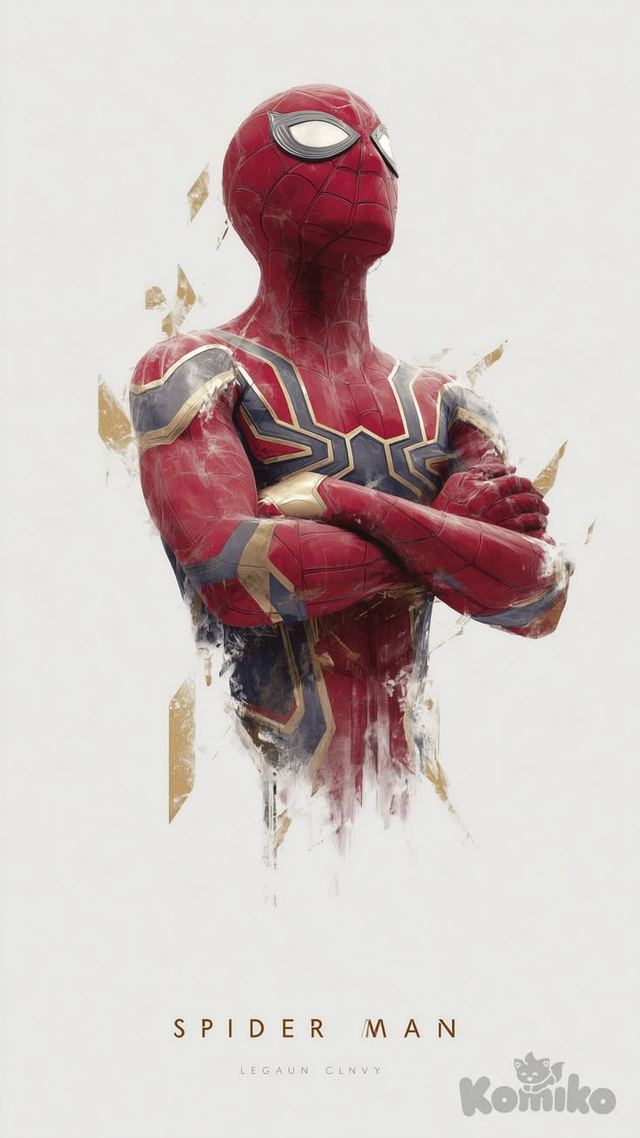
Spider-Man
Peter Benjamin Parker
Jean Grey
Jean Elaine Grey
Catching up on the MCU? See where this fits on our full timeline.
Read next
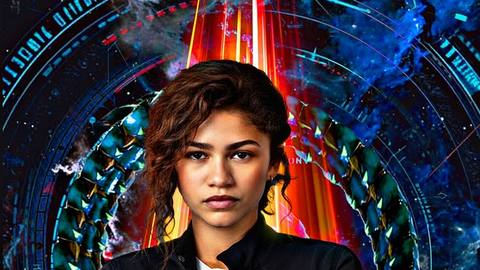
RogerEbert.com Says Brand New Day Is “Scared of Its Best Ideas” — And Gives It the Lowest Score On Our Tracker
Brian Tallerico's RogerEbert.com review gives Spider-Man: Brand New Day 2.5 out of 4 — the lowest score on our…

Den of Geek Gives Brand New Day Four Stars. Its Real Verdict Is About Tom Holland.
Den of Geek's David Crow gives Spider-Man: Brand New Day four stars and calls it the best Tom Holland has ever…
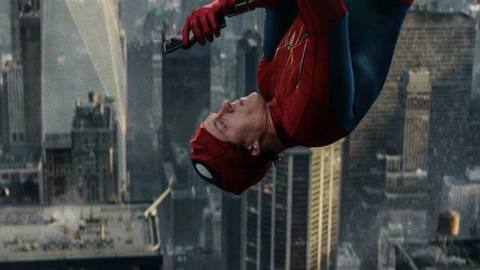
Is Spider-Man: Brand New Day Worth Your Money? What 77 Critics Actually Said
Best-reviewed Marvel film since 2021 — and the lowest-scoring Tom Holland Spider-Man. Both are true at once. Here…