Doctor Doom: The Complete Beginner's Guide Before Avengers: Doomsday
Marvel is handing its whole franchise to a man in an iron mask this December. Here is everything a newcomer needs to know about Doctor Doom, with zero homework.
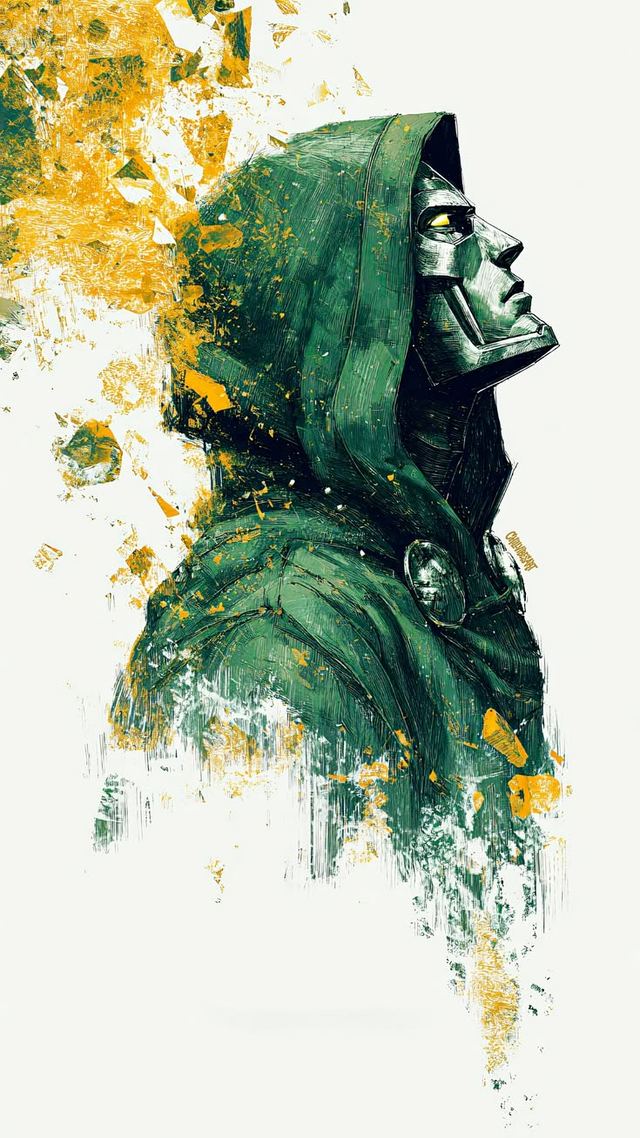
In December 2026, Marvel is going to hand its entire franchise to a man in a green cloak and an iron mask. If you have never read a Fantastic Four comic in your life, that is a genuinely strange sentence. Doctor Doom is not a household name the way Thanos became one, and the MCU had never so much as name-dropped him on screen until this year. This guide fixes that. No prior reading required, no continuity homework, no jargon left undefined — just the version of Victor Von Doom you need in your head before Avengers: Doomsday arrives on 18 December 2026.
Who Doctor Doom Actually Is
Victor Von Doom is the absolute monarch of Latveria, a small fictional European nation he rules with total and entirely unapologetic control. He is also one of the three or four smartest people on Marvel's Earth, a trained sorcerer, and the owner of a suit of powered armour he designed and built himself. That combination — head of state, scientist, magician — is the whole character. Most Marvel villains pick one lane. Doom refuses to.

He debuted in Fantastic Four #5 in 1962, created by Stan Lee and Jack Kirby, and he has been the definitive antagonist of that book ever since. His grudge is personal: he blames Reed Richards, the elastic genius of the Fantastic Four, for the laboratory accident that scarred his face and derailed his life. Whether Reed actually deserves that blame is a question sixty years of comics have very deliberately refused to settle.
The Three Pillars Of Doom
Almost every good Doom story is built on one of three load-bearing traits. Learn these three things and you can pick up any Doom comic cold and understand what the writer is doing with him.
- Ego as an operating system. Doom refers to himself in the third person because he sincerely believes that 'Victor' is a smaller thing than 'Doom'. He is constitutionally incapable of admitting an error, and every plan he loses gets retroactively reclassified as a plan he chose to abandon.
- Absolute competence. He is not a blowhard. Doom has beaten the Fantastic Four, the Avengers, the X-Men, a Celestial and, on one famous occasion, the entire Beyonder-powered cosmos. When he says he can do a thing, he generally can. The threat is real, which is what makes the vanity funny instead of pathetic.
- A real, inconvenient moral code. Doom keeps his word. He honours truces. He has saved the planet when it suited him, protected children who had every reason to fear him, and done the right thing for entirely the wrong reasons. He believes Earth would be safer under his rule — and the uncomfortable part is that the comics keep half-proving him right.
Doom does not want to destroy the world. He wants to run it, correctly, forever, and he is personally insulted that nobody has asked him to.
What Doom Can Actually Do
Newcomers often assume Doom is a tech villain — Tony Stark with worse manners and a nastier country. He is not. His power set is deliberately incoherent, and the incoherence is the point: he refuses to be defeated by specialising.
| Capability | What it means in practice | Why it matters |
|---|---|---|
| Powered armour | Built and constantly upgraded by Doom himself. Force fields, concussive blasts, flight, full life support. | He trades blows with heavy hitters despite having no innate superpowers at all. |
| Sorcery | Trained by Tibetan monks and inheritor of his witch mother's craft. Hexes, wards, summonings, dimensional travel. | Magic walks straight through the tech-based defences most heroes prepare for. |
| Doombots | Autonomous robot duplicates, many of which sincerely believe they are Doom. | The classic cheat. You never know whether you beat him or a machine — and occasionally neither does he. |
| Statecraft | A UN-recognised nation, a standing army, and diplomatic immunity. | You cannot punch a border. Half of all Doom stories are legal problems dressed as fights. |
| Time travel | A functioning time platform he built decades before anyone else managed it. | He treats history as a supply cupboard, which is how he keeps acquiring impossible artefacts. |
Doom In The MCU: What Is Actually Confirmed
This is where the internet gets loud, so let us be precise. Robert Downey Jr. is playing Doctor Doom, directed by Anthony and Joe Russo from a script by Michael Waldron. The film lands on 18 December 2026 after moving off its original 1 May 2026 date. The confirmed cast runs to roughly thirty names and spans the Avengers, the Thunderbolts, the Fox-era X-Men and the new Fantastic Four, with an official logline promising heroes drawn from three distinct universes. The first trailer arrived in July 2026.
What is not confirmed is nearly everything fans think they know. Chris Evans is confirmed to be in the film; whether he is playing Steve Rogers or Johnny Storm has never been stated by Marvel, and both readings remain live. Beyond the cast list and that logline, the plot specifics circulating online are scooper chatter rather than fact, and we are not going to dress them up as anything else.
- Confirmed: RDJ as Doom, 18 December 2026, the Russo brothers directing, Michael Waldron writing, first trailer out.
- Confirmed: a roughly thirty-strong ensemble including Pedro Pascal, Vanessa Kirby, Ebon Moss-Bachrach and Joseph Quinn from the new Fantastic Four, plus Patrick Stewart, Ian McKellen, James Marsden, Rebecca Romijn, Alan Cumming, Kelsey Grammer and Channing Tatum from the Fox mutant era.
- Unconfirmed: Chris Evans' role, any character deaths, the mechanics of how the universes collide, and every plot beat you have seen shouted at you from a thumbnail.
Where To Start: A Five-Step Doom Starter Kit
- Fantastic Four #5 (1962). Twenty pages, and the entire character is already there — the armour, the country, the grudge, the theatrics. Read it for the shape of him, not the plotting.
- Fantastic Four Annual #2 (1964). The official origin: the face, the mother, the university expulsion, the monks on the mountain. Short, and still the spine every later writer builds on.
- John Byrne's Fantastic Four run (1981–1986). The issues that established Doom's honour as inviolable rather than decorative, and gave him a moral floor no later writer has been allowed to remove.
- Books of Doom (2006) by Ed Brubaker. A modern six-issue retelling of the origin narrated by Doom himself, which quietly invites you to work out how much of it he is lying about.
- One World Under Doom (2025). Doom rules the planet, out in the open, with global consent. This is the comic Marvel's marketing has been gesturing at all year, and we take it apart in our full explainer.
If you would rather prepare on screen than on paper, watch The Fantastic Four: First Steps to meet the family Doom is designed to torment, then read our origin breakdown for the psychology underneath the mask. That is genuinely enough preparation for December.
The One Thing Newcomers Get Wrong
Doom is not Marvel's answer to a dark lord. He is Marvel's answer to a tyrant who is also a person — petty about his university grades, tender about his mother, and protective of children, including, famously, Franklin Richards, the son of the man he hates most on Earth. Writers who play him as pure menace produce forgettable stories. Writers who remember he is a wounded egomaniac with a national anthem produce classics. Which version Downey and the Russos land on is the single biggest variable in Marvel's next two years, and we weigh his ceiling against the franchise's previous big bads in our head-to-head analysis.
Frequently asked
Do I need to watch The Fantastic Four: First Steps before Avengers: Doomsday?
Why is Robert Downey Jr. playing both Iron Man and Doctor Doom?
Is Doctor Doom stronger than Thanos?
What does the asterisk on Latveria's status actually mean for the Avengers?
Characters in this story
Catching up on the MCU? See where this fits on our full timeline.
Read next
How Victor Von Doom Became Doctor Doom: The Origin, Beat By Beat
A dead mother, a scarred face, and one refusal to check his own work. The complete origin of Marvel's greatest…
Doom vs Thanos vs Kang: Which Franchise Villain Marvel Actually Got Right
One landed, one collapsed, and one arrives in December. A structural comparison of Marvel's three…
One World Under Doom Explained: What Happens When Doctor Doom Actually Wins
In 2025 Marvel let Doctor Doom conquer Earth — and most of the planet said yes. A full breakdown of the event…