Avengers: Doomsday's Steve Rogers Might Not Be the Man Who Sat on That Bench
Endgame ended with Steve Rogers as an old man on a bench. Doomsday needs him back in fighting shape. One theory says those can't both be true of the same Steve.
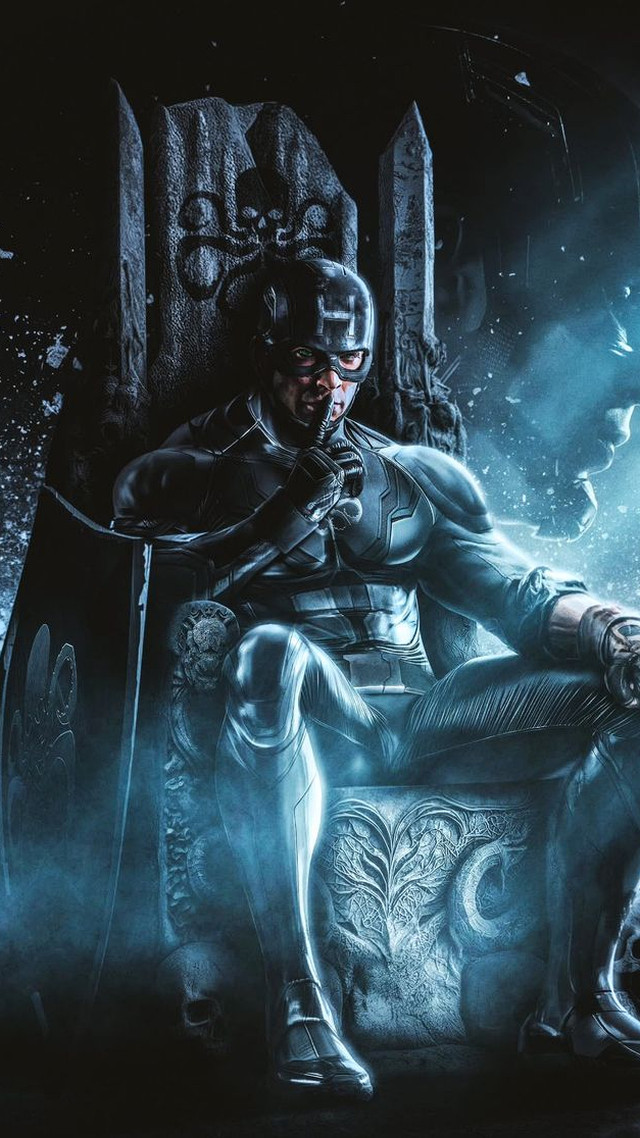
When Marvel confirmed at San Diego Comic-Con 2026 that Chris Evans is coming back for Avengers: Doomsday, the announcement came with a built-in asterisk: he's playing Steve Rogers, not Captain America. Fans reached for the obvious explanation before the panel even ended — Endgame already told us how this ends, an old man on a bench, a shield handed to Sam Wilson. But that explanation doesn't hold up. If Doomsday needs a Steve Rogers who can stand inside an ‘existential’ three-universe collision, that's a rough job for a man already elderly the last time we saw him. What if this Steve Rogers isn't the one who said goodbye on that bench at all?
What Marvel Has Actually Confirmed So Far
Start with what's on record. At the Doomsday panel in Hall H, Marvel confirmed Evans is back and confirmed he isn't returning as Captain America — that identity currently belongs to Sam Wilson. Anthony Mackie, doing press right after, went further and reached for a specific piece of comics history to describe what Steve might be instead.
“Steve Rogers is returning, not Captain America... in the comic book, Steve Rogers becomes Nomad.” — Anthony Mackie, Variety, July 2026
Worth being precise: that's Mackie's own comics reference, not an official title Marvel has applied. It's real comics history regardless — Steve gave up the Captain America identity in the 1970s after uncovering a government conspiracy and briefly operated under the Nomad name, a storyline already documented on this site's own Captain America profile. Whether the film ever says ‘Nomad’ out loud is still unknown. Evans has been just as pointed about why he came back at all:
“I said I would only come back if there was a real reason, and in Doomsday, there's a very real reason why these heroes need Steve Rogers.” — Chris Evans, CinemaCon 2026
Hayley Atwell is confirmed back too, as Peggy Carter, calling Doomsday ‘an existential epic’ and teasing that Peggy will respond to that scale ‘in a very different light than fans have seen before.’ She's also said she hasn't seen the finished film herself. That's a lot of confirmed casting and almost none of the connective tissue explaining how it fits together — the gap this theory tries to fill.
The Problem: Endgame Already Closed the Book on Steve Rogers
Avengers: Endgame didn't leave this ambiguous. After returning the Infinity Stones, Steve stays in the past to live out a full life with Peggy Carter — married, aging naturally, never returning to the timeline he left. He reappears as an old man on a bench beside present-day Sam Wilson and hands him the shield. That's not a cliffhanger. That's an ending.
Do the Math on His Age
Here's the problem nobody's fully explaining. Steve was born in 1918 and was already elderly on that bench after a full life starting in the 1940s — deep into his second century by Doomsday's present day. This is a film built around a three-universe collision and an ‘existential threat,’ with Doom fielding a Sentinel army, not staging a retirement party. Entertainment press covering the Hall H reveal has already flagged that exact mismatch as unresolved — not this article inventing controversy.
The Theory: A Variant Pulled Loose by Yggdrasil
Here's where this article starts speculating, clearly labeled as such. Loki's season 2 finale didn't just save the multiverse — it restructured it. Loki destroys the Temporal Loom, refuses the Sacred-Timeline-or-erasure choice it was rigged to force, and instead holds the branching multiverse together himself, reshaping it into the structure the show visualizes as Yggdrasil — active, ongoing reorganization of every branch's relationship to every other, run by one person, forever. Accept that the multiverse's shape is being actively rewoven rather than left to drift, and it's not a huge leap — though it is still a leap — to wonder if that reweaving put a Steve Rogers back in play for Doomsday. Not the bench-Steve, aged backward. A different branch's Steve, pulled into new adjacency with the main branch by Loki's restructuring.
Why ‘Nomad’ Fits a Variant Better Than a Retcon
Mackie's Nomad reference gets more interesting under this reading. If this Steve is a variant whose own branch never reached the moment he handed a shield to a Sam Wilson, calling him something other than Captain America wouldn't just be about respecting Sam's mantle in the main branch — though it's partly that. It could also be true on this Steve's own terms, the way comics-Nomad Steve kept fighting after walking away from the identity for his own reasons. Two Steves reaching ‘not Captain America’ from two directions beats one Steve doing it for a reason that contradicts 2019.
| Detail | The ‘Bench’ Steve (confirmed, Endgame) | A Variant Steve (this article's theory) |
|---|---|---|
| Age, present day | Elderly — decades into a full life since the 1940s | Unconfirmed; the theory only holds if he isn't |
| Path to Peggy Carter | Married her, lived a full life together | Unknown — possibly an earlier point in a different version of it |
| The shield | Physically handed to Sam Wilson on the bench | No evidence he ever did, in this reading |
| Why ‘not Captain America’ | Sam already holds the identity in the main branch | Could also be his own branch never resolved that identity |
What This Would Actually Do to Endgame's Ending
Here's the part worth saying plainly, because ‘it's a variant’ theories usually get dismissed as a cheap way to walk back an ending fans loved. It's the opposite here. If Doomsday's Steve is the same bench-Steve somehow restored to fighting shape — de-aged, revived, whatever mechanism gets invented — that does far more damage to Endgame's finale than a variant ever could, quietly undoing the choice to grow old with Peggy Carter the moment a comeback became attractive. A variant reading leaves the original ending untouched: that Steve stayed, aged, and is presumably gone by now, off-screen, exactly how the film left him. It also raises whether Doomsday's Peggy is the variant Steve's Peggy, or the main branch's version meeting a Steve she never shared a life with. Even Atwell hasn't seen the finished film — nobody has answered that yet.
Where This Fits on the Theory Board
This isn't the only Loki-flavored read on Doomsday's cast right now. It's a deliberately different mechanism from the theory that Doom took Loki's power by force — nothing here requires Loki to have lost anything, only to have rearranged branches he already holds together. It pairs with what a returning Steve means for Sam Wilson's grip on the shield and the paradox risk in Loki reorganizing his own origin branch.
What Would Confirm or Kill This Theory
- Steve reacting to present-day people or events like a stranger would — unfamiliarity, not amnesia
- On-screen dialogue using ‘variant’ or ‘branch’ language applied directly to Steve
- A physical presentation that doesn't track with a man who's lived a full life since the 1940s
- Peggy Carter treating this Steve's history with her as unfamiliar, not remembered
- Marvel, Evans, or the Russo brothers stating plainly this is the same Steve from the bench
- An on-screen explanation that restores the original Steve's youth while keeping his full Endgame history intact
- Any suggestion that Endgame's ending is being retroactively altered rather than left standing
- Confirmation this is simply an earlier point in the same Steve's post-Endgame life, not a present-day return
None of that exists yet. What exists is a confirmed actor, a confirmed non-Captain-America role, a comics reference from his own co-star, and a 2019 ending that was never built to bend this way. The variant read isn't proof of anything — it's the theory that has to be true for those facts to make sense together. Whether Marvel is thinking that far ahead is the real open question.
Frequently asked
Is Chris Evans returning as Captain America in Avengers: Doomsday?
Does this theory mean Avengers: Endgame's ending is being undone?
How old would the original, bench-ending Steve Rogers be in Avengers: Doomsday?
Is Hayley Atwell's Peggy Carter also a variant in this theory?
Is ‘Nomad’ an officially confirmed role for Steve Rogers in Avengers: Doomsday?
Characters in this story
Catching up on the MCU? See where this fits on our full timeline.
Read next
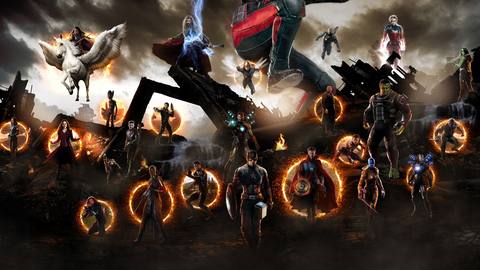
The Steve Rogers "Baby" Shot Everyone's Debating: What It Actually Shows, and What It Doesn't
Official footage really does show Chris Evans holding a baby in a quiet, sunlit scene. What that means — retirement…
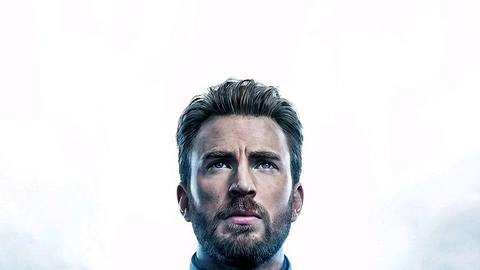
Hydra Cap or Nomad Steve? This Site's Own Theories, Weighed Against Each Other
This site has now made the case for a Nomad-variant Steve, a Hydra-branch Steve, and the argument that Doom…
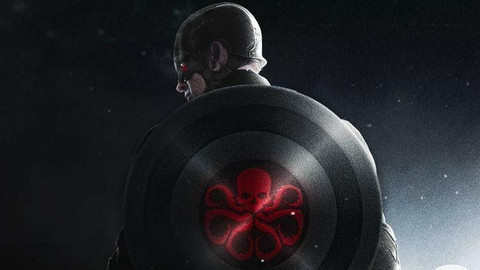
Why Steve Rogers' Return in Doomsday Is a Quiet Threat to Sam Wilson's Captain America
Anthony Mackie says Steve Rogers isn't Captain America in Doomsday. So why does his return still quietly threaten…