Everything You Need To Know About The Fantastic Four
Four people, one rocket, one very bad decision. A complete newcomer's guide to Marvel's first family, why they matter, and exactly where to start.
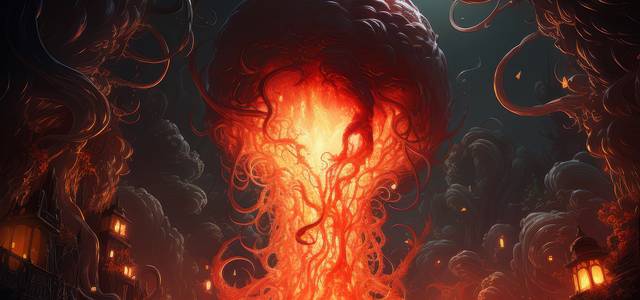
Marvel's modern era did not begin with Spider-Man or the Avengers. It began in November 1961 with four people who stole a rocket, flew it badly, and came back changed. The Fantastic Four are the foundation of everything Marvel became, and for decades they were also the corner of the universe most casual fans knew least about. That has changed fast — First Steps was Marvel's biggest film of 2025, and the family is central to what comes next. Here is the entire team, explained from zero.
The Premise, In One Paragraph
A scientist, his partner, her younger brother and his best friend take an experimental spacecraft into orbit without adequate shielding. Cosmic radiation rewrites all four of them. They come home with powers, no secret identities, and no interest in pretending to be anyone else. They are not vigilantes and they are not soldiers. They are explorers who publish, argue at the dinner table, and file taxes on a Manhattan skyscraper. That domestic detail is the whole appeal: the Fantastic Four are a family first and a superhero team a distant second.
Meet The Four
| Member | Real name | Power | The role they play in the family |
|---|---|---|---|
| Mister Fantastic | Reed Richards | Elastic body, near-limitless malleability | The father and the problem. The smartest man alive, and frequently the worst communicator in the room. |
| Invisible Woman | Susan Storm Richards | Invisibility and hard-light force fields | The actual most powerful member, and the one holding the unit together. Her force fields have stopped planetary threats. |
| Human Torch | Johnny Storm | Full-body plasma ignition and flight | The kid brother. Comic relief that occasionally turns into genuine heroism when nobody is watching. |
| The Thing | Ben Grimm | Superhuman strength and an orange rock hide | The heart. The only one who cannot switch his powers off, and therefore the one who pays for the accident forever. |
Reed Richards is the engine of most plots and the source of most of the team's problems. Sue Storm began in 1961 as a badly underwritten character and has been rebuilt over decades into the team's strategic and emotional centre. Johnny Storm is the loudest and the youngest. And Ben Grimm is the reason the book works: a man who took the same trip as his friends and came back unable to walk down the street unnoticed.
Every other Marvel team is people who chose this. The Fantastic Four are people who were changed on a Tuesday and had to build a life around it.
The Vocabulary You Will Hear
- The Baxter Building — their New York headquarters, laboratory and home. Half science facility, half apartment block.
- The Negative Zone — an antimatter dimension Reed discovered and keeps a door to. Home of Annihilus and a reliable source of trouble.
- Unstable molecules — the fictional fabric Reed invented so their costumes survive stretching, burning and growing. Effectively every superhero in Marvel wears his invention now.
- The Future Foundation — the team's school for gifted children, a later development that reframed them as educators rather than adventurers.
- Franklin and Valeria — Reed and Sue's children. Franklin is a reality-warping mutant of near-limitless power; Valeria is arguably smarter than her father and Doom's godchild.
Why They Matter To The Wider Marvel Universe
You cannot explain Marvel's cosmic tier without them. The Fantastic Four introduced Galactus and the Silver Surfer in 1966, which remains the single most influential storyline the company has published. They introduced the Skrulls, the Inhumans, the Negative Zone and Black Panther, who debuted in their book in 1966 before ever headlining his own. They also introduced Doctor Doom, the villain now carrying Marvel's next two Avengers films — covered in full in our Doom beginner's guide.
Where To Start: A Six-Step Reading And Watching Order
- Watch The Fantastic Four: First Steps (2025). A 1960s-retrofuture standalone that gets the family dynamic right and does not require any other MCU homework. Our verdict is in the full review.
- Read Fantastic Four #1 (1961). Rough, fast, and historically essential. You will see the exact moment Marvel stopped writing gods and started writing people.
- Read The Galactus Trilogy, Fantastic Four #48–50 (1966). Lee and Kirby at their absolute ceiling. A world-eater arrives, and the resolution is not a punch.
- Read John Byrne's run (1981–1986). The definitive modern take: Sue becomes Invisible Woman rather than Invisible Girl, Doom gets his moral code, and the family stops being a period piece.
- Read Jonathan Hickman's run (2009–2012). Dense, patient, and the best Reed Richards ever written — a man trying to solve everything and failing at the one thing that matters.
- Read Mark Waid and Mike Wieringo's Unstable Molecules era and Waid's main run (2002–2005). The friendliest jumping-on point of the lot if the older art is a barrier.
The Common Complaint, And Why It Is Wrong
People say the Fantastic Four are boring because they are nice. That misreads them. Reed is a distant husband who solves for humanity and forgets his wife. Sue's arc across sixty years is a woman refusing to be defined by the men around her. Johnny is arrested development given a flamethrower. Ben is grief in a body that will not let him forget. The nice-family surface is the setup; the friction underneath is the story, and it is why the book still works when it is written properly. For the wider map of Marvel's must-read arcs, our essential storylines guide places the Fantastic Four's peaks in context.
The team returns in Avengers: Doomsday on 18 December 2026, with Pedro Pascal, Vanessa Kirby, Ebon Moss-Bachrach and Joseph Quinn all confirmed in the cast. What role they play against Doom has not been announced. Everything you have read suggesting otherwise is unconfirmed.
Frequently asked
Do I need to watch the older Fantastic Four films first?
Who is the strongest member of the Fantastic Four?
Are the Fantastic Four mutants?
Where does First Steps sit in the MCU timeline?
Characters in this story
Mister Fantastic
Reed Richards

Invisible Woman
Susan Storm Richards
Human Torch
Jonathan Lowell Spencer Storm
The Thing
Benjamin Jacob Grimm
Catching up on the MCU? See where this fits on our full timeline.
Read next
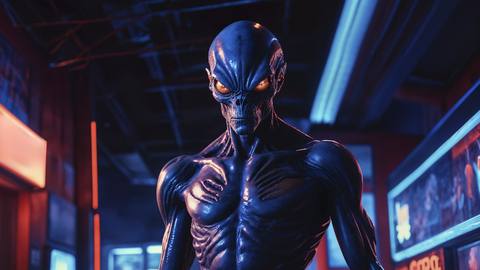
The Fantastic Four: First Steps Review — Marvel's First Family Finally Get A Film Worth Having
Gorgeous, warm, and structurally undercooked. Marvel's fourth attempt at the Fantastic Four is by far its best…
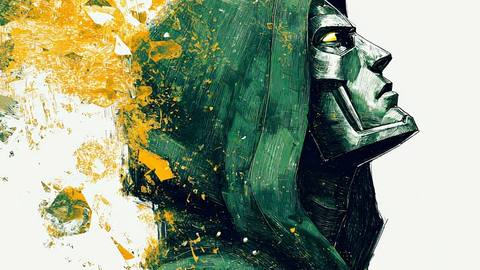
Doctor Doom: The Complete Beginner's Guide Before Avengers: Doomsday
Marvel is handing its whole franchise to a man in an iron mask this December. Here is everything a newcomer needs…
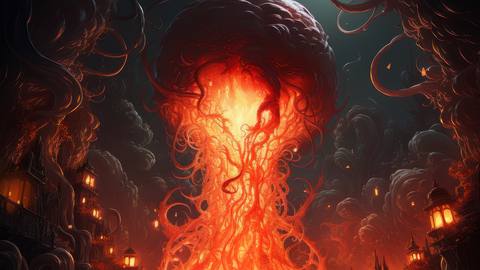
The Essential Marvel Storylines Every Fan Should Read At Least Once
Eighty-five years of publishing, narrowed to the arcs that actually matter. A ranked, honest reading list with…