The Fantastic Four: First Steps Review — Marvel's First Family Finally Get A Film Worth Having
Gorgeous, warm, and structurally undercooked. Marvel's fourth attempt at the Fantastic Four is by far its best — and it still runs out of story before it runs out of goodwill.
Four attempts across twenty years, three of them disasters, and the fourth is finally a film. The Fantastic Four: First Steps arrived in July 2025 as the film Marvel needed more than any other on its slate, and it delivered — $519.1 million worldwide against a $200 million budget, 87% critical approval, and the studio's biggest release of the year. It is also, tellingly, a film that no Marvel title joined in 2025's global top ten. That is the context. Here is the picture.
The Verdict
What It Gets Right: The Look
Matt Shakman's film is set in a retrofuturist 1960s — not our 1960s with jetpacks, but a fully committed alternate mid-century where the space race succeeded and everyone dresses accordingly. It is a genuine aesthetic, sustained across production design, costume, title cards, score and camera language, and it is the first time in years a Marvel film has looked like it was made by people with a specific visual idea rather than a colour-correction pass.
This matters more than it sounds. The Fantastic Four are a 1961 creation and every previous adaptation tried to modernise them, which is precisely why they kept failing — the optimism reads as naivety in a contemporary setting and as period charm in a historical one. Setting the film in a parallel mid-century solves a problem four films could not.
What It Gets Right: The Family
The casting is the film's other coup. Pedro Pascal plays Reed Richards as a man permanently three conversations ahead and consistently in the wrong one, which is exactly the character. Vanessa Kirby's Sue Storm is the film's spine and, correctly, its most powerful figure — the movie never once treats her as the wife. Joseph Quinn gives Johnny a restlessness underneath the showboating. And Ebon Moss-Bachrach's Ben Grimm is the quiet triumph: a man carrying his transformation with a weariness the effects work never undercuts.
- They talk over each other, constantly, the way families do and superhero teams almost never do.
- Nobody has a secret identity, which removes the entire genre's most tedious plot engine in one stroke.
- The domestic scenes are longer than the action scenes and they are better.
- The film understands that Sue and Reed's marriage is the load-bearing relationship, not the Reed–Ben friendship, and gives it real screen time.
Galactus, And Why He Works
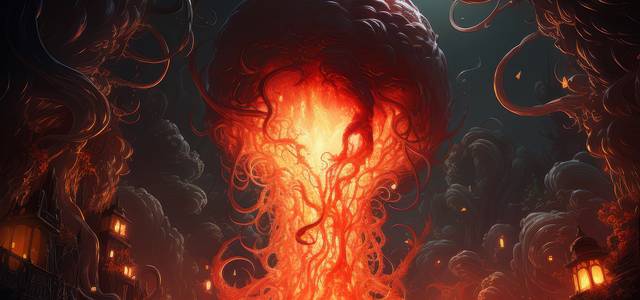
Ralph Ineson's Galactus is the best realisation of a cosmic entity Marvel has managed. He is enormous, unhurried, and — critically — never reduced to a weather system, which is the mistake the 2007 film made and never recovered from. He walks. He is architecture with intent. The film gives him almost no dialogue and it does not need to.
Julia Garner's Shalla-Bal as the Silver Surfer is the more interesting choice and the more compromised one. The herald's tragedy — a person who sold their world to save it — is stated rather than dramatised, and she disappears for long stretches when the film should be building her. There is a better version of this movie with twenty more minutes of her in it.
It is the rare Marvel film that would be improved by being longer. That is not a complaint you get to make very often.
Where It Falls Down
The structural problem is straightforward: the film has a first act, a superb second act, and then remembers it needs a third. Once Galactus is established, the movie has roughly one idea about how to resolve him, deploys it, and ends. The final twenty minutes are competent and weightless, and the resolution leans on a piece of emotional logic the script has not adequately built.
| Element | Assessment | Score |
|---|---|---|
| Cast and family dynamic | Best ensemble Marvel has assembled since the original Avengers | 9/10 |
| Production design | A committed, coherent aesthetic. Genuinely gorgeous. | 9/10 |
| Galactus | Enormous, patient, correctly staged. A real event. | 8.5/10 |
| Screenplay structure | Excellent setup, thin middle-to-end, rushed resolution | 5.5/10 |
| Antagonist stakes | A planet-eater with no negotiating position leaves the heroes only one move | 5/10 |
| Standalone-ness | Almost entirely self-contained, which is a virtue and a rarity | 9/10 |
The secondary issue is that Paul Walter Hauser's Mole Man is a delight who exists in a different film, arriving to provide texture and leaving before he can complicate anything. And the movie's biggest swing — an emotional decision involving Reed and Sue's son — is treated as a plot device where it should be the entire third act. Anyone who has read a Fantastic Four comic knows Franklin is the most consequential character in this family's history, and the film touches that and moves on.
What It Means For December
Pascal, Kirby, Moss-Bachrach and Quinn are all confirmed in the roughly thirty-name ensemble for Avengers: Doomsday on 18 December 2026. Given that the Fantastic Four's defining antagonist is the man Robert Downey Jr. is playing, that is not a coincidence, though Marvel has confirmed nothing about how the film uses them. If you are catching up before December, our Doctor Doom beginner's guide is the fastest route in, and our full guide to the team covers the sixty years First Steps is compressing.
The Bottom Line
First Steps is a warm, handsome, slightly hollow film that gets the hardest parts right and fumbles the easiest ones. The family works. The design works. Galactus works. What it lacks is a plot with enough friction to justify its own runtime, and a willingness to let the emotional stakes it raises actually cost something. That is a fixable problem, and after four attempts, having the fixable problems be the plot rather than the characters is genuine progress.
It is a better film than Brave New World by an enormous margin and a slightly worse one than Thunderbolts*, which we cover in our review. Recommended without reservation for anyone who has ever wanted to like these characters and never been given the chance.
Frequently asked
Do I need to have seen other MCU films before First Steps?
How did The Fantastic Four: First Steps perform at the box office?
Is there a post-credits scene?
Is this connected to the 2005 and 2015 Fantastic Four films?
Characters in this story
Mister Fantastic
Reed Richards

Invisible Woman
Susan Storm Richards

Human Torch
Jonathan Lowell Spencer Storm
The Thing
Benjamin Jacob Grimm
Galactus
Galan
Catching up on the MCU? See where this fits on our full timeline.
Read next
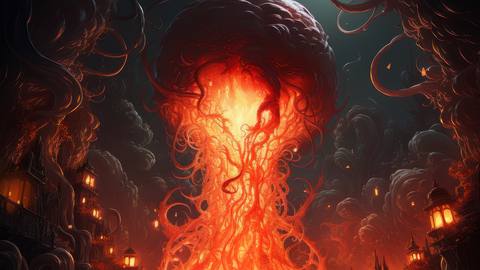
Everything You Need To Know About The Fantastic Four
Four people, one rocket, one very bad decision. A complete newcomer's guide to Marvel's first family, why they…
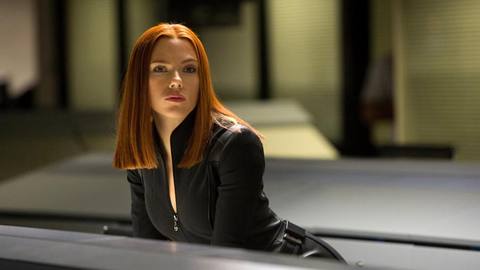
Thunderbolts* Review — The Best Marvel Film In Years, And Nobody Came
A superhero film about depression that actually commits to it. Thunderbolts* is Phase 5's high point, Florence…
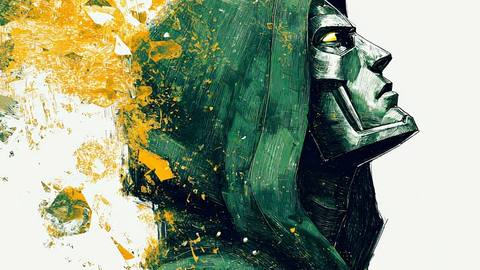
Doctor Doom: The Complete Beginner's Guide Before Avengers: Doomsday
Marvel is handing its whole franchise to a man in an iron mask this December. Here is everything a newcomer needs…