
Biography
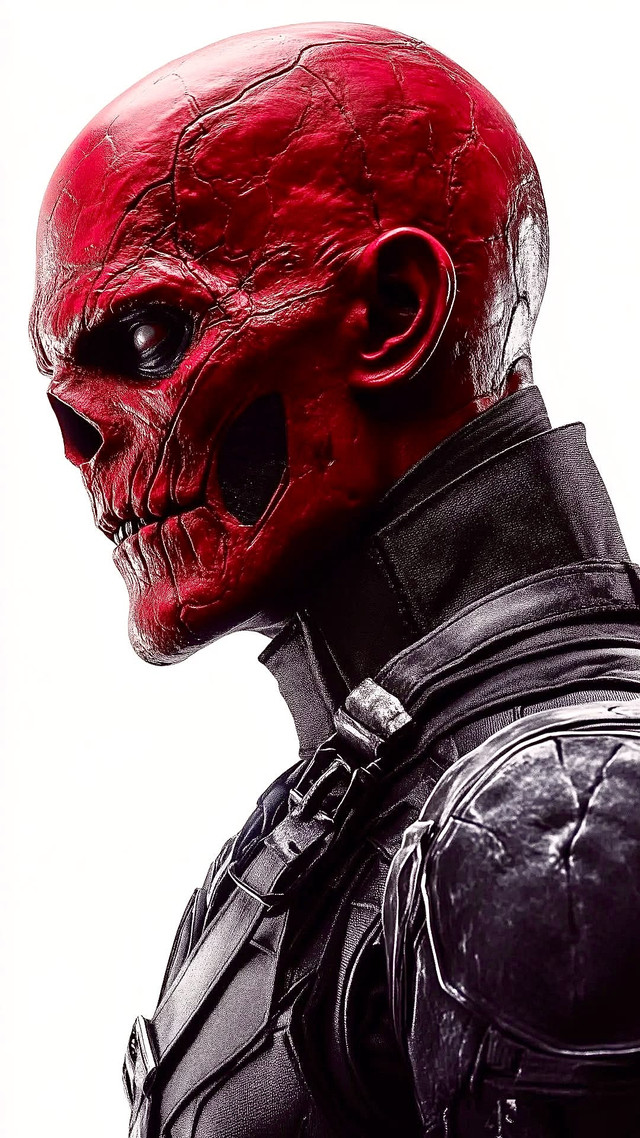
Johann Shmidt was a bellhop with nothing when Hitler personally selected him as a symbol and put the mask on his face. That origin matters: the Red Skull is not a mad scientist or a warlord, he is a true believer who was handed power because he wanted it more than anyone else in the room. He has no superpowers worth listing. What he has is total ideological conviction and a talent for making other people carry it for him.
Marvel has kept him alive across eight decades through cloning, cryogenics, brain transplants and outright body theft — including a stint wearing a clone of Steve Rogers' own body and, more recently, running around with Professor X's telepathy grafted into his skull. Every resurrection makes the same point: fascism does not die when the man does. Captain America can win every fight and still find the Skull waiting, because what he represents keeps finding a new host.
Vital statistics
- Real name
- Johann Shmidt
- Also known as
- The Skull, Dell Rusk, The Stonekeeper
- Species
- Human (cloned body)
- Place of origin
- Germany
- First appearance
- Captain America Comics #1 (March 1941)
- Created by
- Joe Simon, Jack Kirby
- Affiliations
- Hydra, Nazi Party, Skeleton Crew, Cabal
Power grid
Intelligence5
Strength3
Speed2
Durability3
Energy2
Fighting5
Rated 1–7 on the classic Marvel power-grid scale.
Powers
- Peak Human Conditioning
Personally trained by Nazi Germany's best instructors, he fights at Olympic level well past normal retirement age.
- Master Strategist
He plans wars, coups and psychological operations decades in advance.
- Cloned Immortality
Arnim Zola's body-banking technology returns him from death repeatedly in fresh clone bodies.
- Hydra Command
He commands a global terror network with military, scientific and financial arms.
- Grafted Telepathy
In modern stories he has wielded Charles Xavier's transplanted psychic powers to devastating effect.
- Cosmic Cube Manipulation
He has repeatedly seized the Cosmic Cube and reshaped reality with it, always briefly.
Abilities
- Expert marksman and hand-to-hand combatant
- Master of propaganda and psychological warfare
- Skilled political manipulator with global reach
- Fluent tactician in both conventional and asymmetric warfare
Weaknesses
- No superhuman durability — he is still a man in a mask
- Ideological rigidity makes him predictable
- Dependent on Arnim Zola's technology to survive
- Contempt for subordinates guarantees betrayal
Comics history
Simon and Kirby created the Red Skull for Captain America Comics #1 in 1941, and he became Marvel's first genuinely political villain — a propaganda figure invented to be beaten. He returned in Tales of Suspense #79-81 (1967) with the Cosmic Cube, establishing the reality-warping escalation he keeps chasing.
Ed Brubaker's Captain America run made him a genuine horror: the Winter Soldier's handler, the architect of Steve Rogers' assassination in Captain America #25 (2007), and a consciousness that survives inside a machine. Rick Remender later grafted Xavier's brain into him for the Axis event, and Nick Spencer's Secret Empire (2017) took his logic to its conclusion by replacing Captain America himself with a Hydra loyalist.
MCU appearances
| Title | Year | Note |
|---|---|---|
| Captain America: The First Avenger | 2011 | Hugo Weaving as Johann Schmidt |
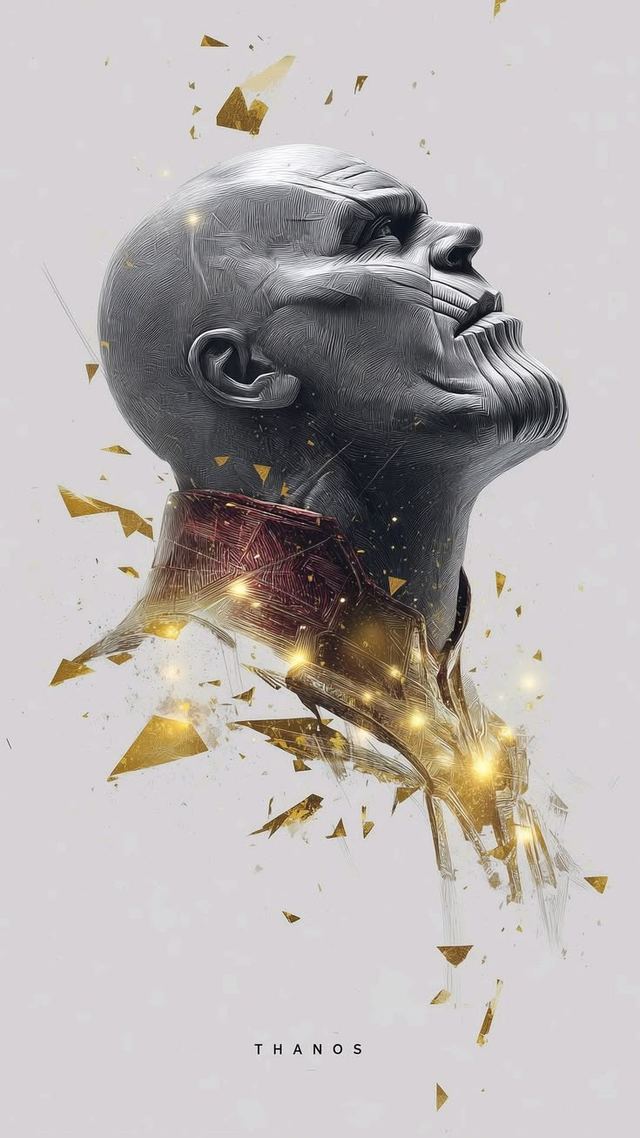
| Avengers: Infinity War | 2018 | Returns as the Stonekeeper on Vormir, played by Ross Marquand |
On screen

Allies
- Arnim Zola
- Baron Zemo
- Crossbones
- Sin
Enemies
- Captain America
- Bucky Barnes
- Sharon Carter
- Nick Fury
Weapons & equipment
- Dust of Death
- Luger pistol
- Cosmic Cube (repeatedly)
- Hydra infrastructure
- Zola body-transfer technology
Trivia
- Hitler personally recruits him in the original origin, handing him the mask as a piece of propaganda design.
- His daughter Sin and his chief enforcer Crossbones carry on the operation whenever he is between bodies.
- The Skull spent years wearing a clone of Steve Rogers' body, giving him the super-soldier physique he always envied.
- In Avengers: Infinity War he is the keeper of the Soul Stone on Vormir — punished by the Tesseract he tried to control.
- Secret Empire (2017) let his ideology win by proxy, turning Captain America himself into a Hydra agent for a full summer of publishing.
Famous quotes
Cut off one head, two more shall take its place.
You could have had the power of the gods. Instead you wear a flag on your chest.
I do not die. I am merely inconvenienced.
Timeline
- 1941
Debuts in Captain America Comics #1.
- 1967
Returns in Tales of Suspense #79-81 with the Cosmic Cube.
- 2007
Orchestrates Captain America's assassination in Brubaker's run.
- 2014
Gains Professor X's telepathy in AXIS.
- 2017
Secret Empire installs a Hydra Captain America.
Gallery



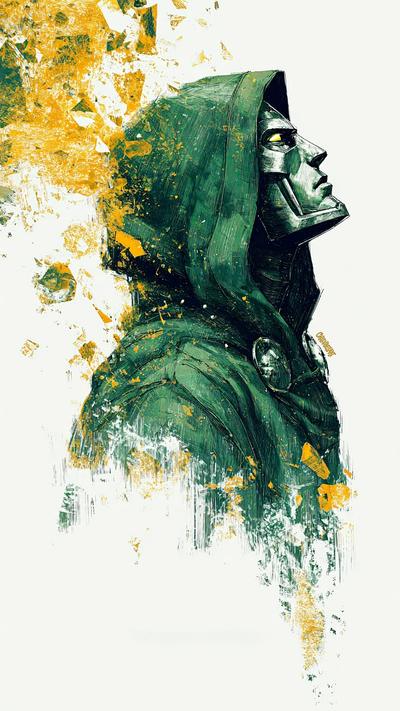


Poster art is generated from each character’s signature palette. Drop official art into assets/images/ and set the img field to swap it in.
Related characters

Captain America
Steven Grant Rogers

Baron Zemo
Helmut J. Zemo
Doctor Doom
Victor von Doom

Kingpin
Wilson Grant Fisk

Taskmaster
Anthony Masters
Latest on Red Skull
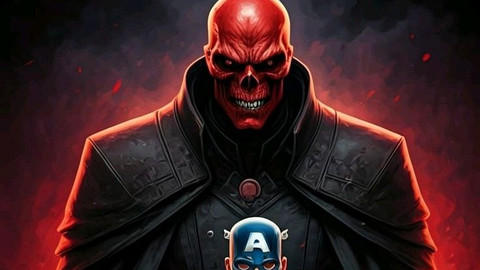
Is the Red Skull Still Alive on Battleworld?
Red Skull vanished after Endgame and nobody explained why. Here's the theory that he's not dead, just cursed…
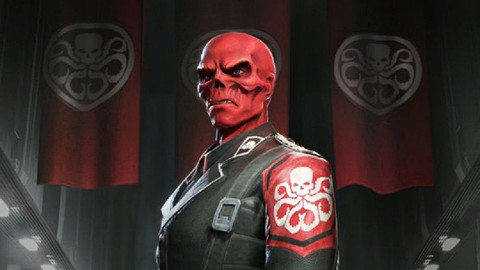
Red Skull Never Needed to Beat Captain America — He Just Needed to Rewrite Him
In the comics, Red Skull beat Captain America without landing a punch. He used a Cosmic Cube to make Steve Rogers a…
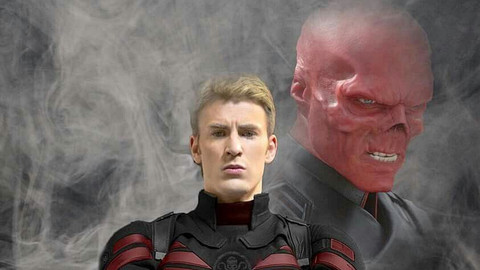
The Cruellest Reading of Endgame: Steve Rogers Got His Dance — and Left Another Version of Himself in the Ice for HYDRA
Steve stayed for the dance. But in the branch he left behind, a frozen soldier still waits under the ice — and in…
Frequently asked
Does the Red Skull have superpowers?
Not inherently. He is a peak-conditioned human with a genius for strategy and propaganda, kept alive across eighty years by Arnim Zola's cloning and body-transfer technology. His real weapons are Hydra, the Cosmic Cube whenever he can get it, and other people's fear.
Why is the Red Skull's face like that?
In the comics it is a mask — a piece of Nazi propaganda design he later has grafted or replicated. The MCU changed it to a physical deformity caused by an early, unstable version of the super-soldier serum.
How is the Red Skull the Soul Stone keeper in Infinity War?
After touching the Tesseract in The First Avenger he was teleported to Vormir and bound there as the Stone's guardian — able to guide seekers but never to hold the prize himself. Ross Marquand took over the role from Hugo Weaving.