Is the Red Skull Still Alive on Battleworld?
Red Skull vanished after Endgame and nobody explained why. Here's the theory that he's not dead, just cursed, freed, and waiting somewhere Doomsday could find him.
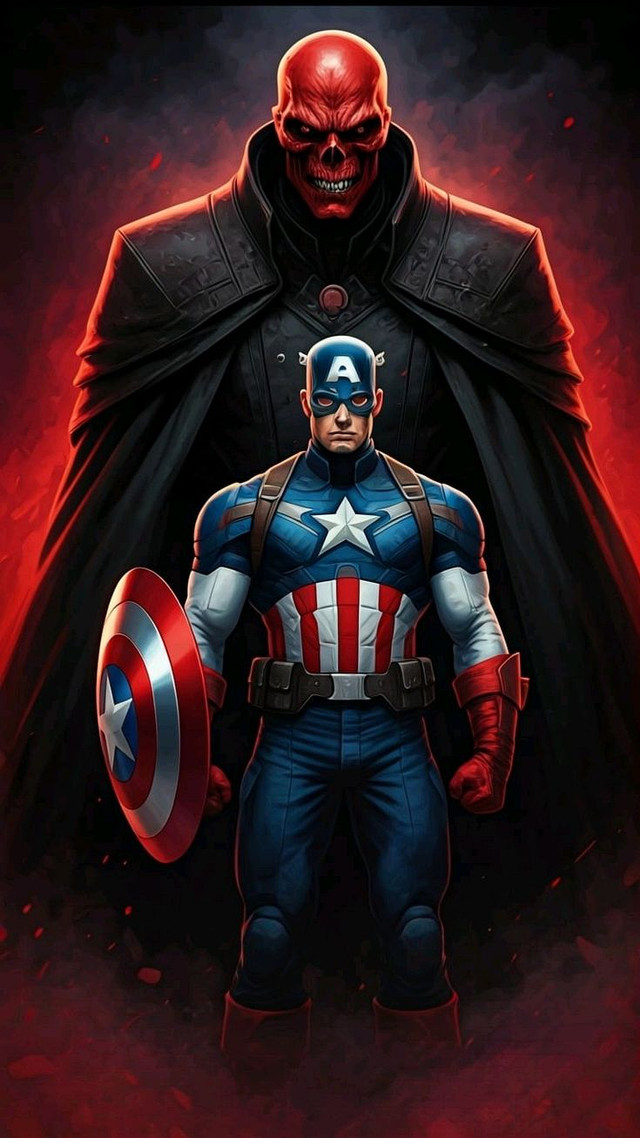
Red Skull vanished from the Marvel Cinematic Universe in the summer of 2019, and nobody has ever said where he actually went. That silence is the whole engine behind the Red Skull Battleworld theory now circulating among fans ahead of Avengers: Doomsday — the idea that when the Soul Stone was destroyed, the curse keeping Johann Schmidt trapped on Vormir broke along with it, rather than ending him.
This is not a report. Nobody at Marvel Studios has confirmed Red Skull is returning for Avengers: Doomsday, cast an actor in the role, or said the word Battleworld in connection with this film. What the theory has going for it is something rarer than a leak: a genuine gap in the story the films left open, built from real mechanics shown across Captain America: The First Avenger, Infinity War, and Endgame.
It's also a good excuse to put The First Avenger back on before December. The film hides its most useful clue about Red Skull's fate in a scene most people remember for its effects rather than its details — the Tesseract experiment that creates him, and the vanishing act that ends his story on screen. Watch both closely and the Red Skull Battleworld theory stops sounding like a reach.
What Actually Happened to Red Skull, According to the Films
The Tesseract Punishes Him First
The mechanics start in Captain America: The First Avenger. Johann Schmidt builds his entire ideology around the Tesseract's power, and when he finally holds the cube with his bare hands in the film's climax, it doesn't reward him. Some kind of aperture opens above him and pulls him straight through, his body consumed by the light. The film cuts away immediately. No body, no funeral, no confirmation of death — just a man pulled somewhere the camera doesn't follow.
For years, that was treated as the end of it. Then Infinity War revealed where the light had actually sent him: Vormir, one of the emptiest planets in the universe, where he'd apparently been waiting the better part of a century as a hooded, robed figure calling himself the Stonekeeper.
Guarding a Stone He Can Never Touch
The rules of Vormir, as the films lay them out, are specific. Whoever wants the Soul Stone has to trade something they love for it — a soul for a soul — and the guardian's entire function is to explain that price to anyone who shows up. Red Skull can see the stone and describe exactly what it costs, but he's never shown taking it himself. He's a herald standing next to a prize he's forbidden from claiming.
- Whoever wants the Soul Stone must trade something they love for it — a soul for a soul.
- The guardian's role is to explain that price to whoever arrives, not to pay it himself.
- Every on-screen version of the Stonekeeper, from the 2014 timeline to the 2018 'present', is recognisably the same figure doing the same job — implying one continuous existence, not several.
- No other Infinity Stone in the MCU has a guardian shown on screen, which makes Vormir's rules — and the fate of whoever enforces them — an outlier the films have never revisited.
That detail matters more than it looks. Red Skull's punishment for touching the Tesseract wasn't death — it was an eternity of proximity to power he can describe in exhaustive detail and never use himself. That's a specific kind of curse, and specific curses tend to have specific terms.
The Loose Thread Endgame Never Tied Off
The Time Heist Complication
Endgame adds another layer. During the time heist, Natasha Romanoff and Clint Barton travel back to 2014 Vormir, where the same Red Skull explains the same price to them that he once explained, in the present timeline, to Thanos. Natasha dies for it. The team gets a second Soul Stone, and the mission moves on without anyone stopping to ask what any of this means for the being standing guard over it.
What Endgame Actually Did to the Stones
By the film's end, an older Steve Rogers is tasked with returning every borrowed stone to its exact place in the timeline, while the stones actually used in the climactic battle against Thanos are destroyed — first by Thanos himself, then, more permanently, by Tony Stark's own snap. Which physical Soul Stone ends up where, and what happens to the guardian tied to it once a stone stops existing, is never addressed. The film has bigger things on its mind than Red Skull's continuity.
That silence is the entire foundation the Red Skull Battleworld theory is built on. The films establish, in careful detail, what happens to someone who tries to take the Soul Stone. They never establish what happens to its guardian once the stone itself is gone.
The Red Skull Battleworld Theory: Freed, Not Erased
The Curse-Removal Reading
Here's the theory in its simplest form. If the Stonekeeper's curse was a direct consequence of the Soul Stone's existence — punishment for reaching for it, tied to it, dependent on it — then destroying the stone doesn't necessarily destroy Red Skull along with it. It removes the thing that was cursing him. No stone, no sentence.
- Schmidt touches the Tesseract and is transformed and removed from the story — not killed on screen.
- He resurfaces decades later on Vormir, cursed to guard the Soul Stone and forbidden to touch it himself.
- The Soul Stone eventually gets folded into the final battle against Thanos, and is destroyed with the rest of the stones.
- Nothing on screen shows what that destruction does to the guardian whose entire role was tied to that stone existing.
- If the curse depended on the stone, no stone plausibly means no curse — leaving Red Skull alive, human-shaped, and with nowhere established to go.
That reading is consistent with everything the films show. Red Skull was never the Soul Stone's prisoner in a literal, physical sense — he could apparently move around Vormir freely and speak to visitors, doing anything except leave and except touch the stone himself. His punishment was the job. Remove the job by removing the stone, and there's arguably nothing left keeping him there.
Immortal and Stranded Is a Worse Fate Than Dead
The uncomfortable part of this version of events is that it doesn't kill Red Skull off cleanly — it leaves him alive, alone, and functionally un-killable on an empty planet at the edge of the universe, with nothing left to guard and no established way home. The First Avenger already showed the Tesseract's power transforming him into something not quite human, and nothing in the films suggests that transformation ever reversed.
That's the state a lot of fans think Doomsday could plausibly find him in — not resurrected, not dramatically brought back from the dead, just still there, decades after anyone bothered to check.
Red Skull isn't a ghost story. He's a loose end the MCU cursed with immortality and then simply forgot to write out.
Rewatch Alert: What The First Avenger Is Actually Telling You
The Experiment Scene Nobody Rewatches Closely
Most people remember Red Skull's origin scene as body horror: the serum burns, the mask fuses to bone, the face underneath is permanent. What rewards a closer look is Schmidt's reaction once it's done. He doesn't panic and he doesn't grieve the disfigurement — he treats it as proof that Erskine's formula works exactly as advertised, and that he was right to take a risk the American programme wouldn't. That's the character's entire worldview compressed into one scene: power is worth any physical price, including one you can never undo.
The Vanishing Nobody Explains
The second scene worth slowing down for is the ending, aboard the Valkyrie. Schmidt opens the Tesseract's case against every warning Captain America gives him, lifts the cube out with his bare hands, and the film shows it responding by opening some kind of aperture above him and pulling him straight through. Then it simply cuts away. No body, no death scene — just a deliberate visual choice that plays like a transportation rather than an execution.
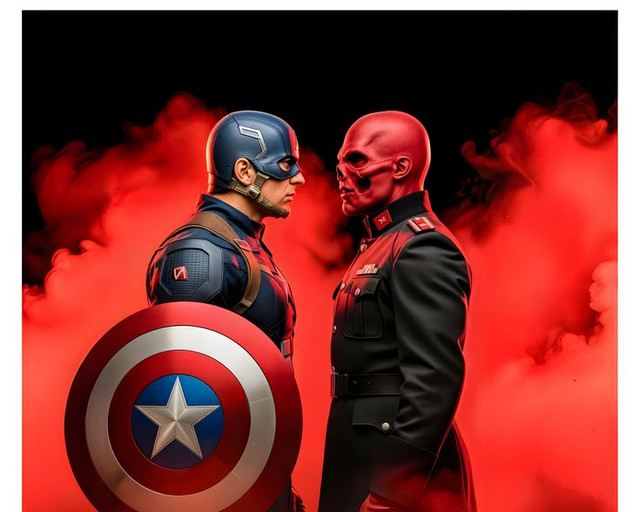
Watched again with Infinity War in mind, that choice looks less like an oversight and more like a plant. Captain America: The First Avenger never actually says Red Skull died. It just stops telling you where he is — which is precisely the gap the Red Skull Battleworld theory exists to fill.
Where Chris Evans and Doomsday Actually Come In
The Unrevealed Role Problem
Chris Evans is confirmed to appear in Avengers: Doomsday. What he's playing isn't. Marvel Studios hasn't said whether he's back as Steve Rogers, as Johnny Storm, or as somebody else entirely, and that silence has become its own small industry of speculation — see the ongoing debate over that cryptic teaser for how far that particular rabbit hole goes.
Red Skull isn't on that shortlist in any official capacity. Nobody has cast him, teased him, or confirmed him. But the character's history with Captain America's corner of the franchise, an unaddressed multiversal-scale curse, and a film built explicitly around heroes and villains from multiple universes colliding is exactly the kind of coincidence fan theories are made of.
Battleworld as a Loose-End Depository
The 'Battleworld' half of this theory borrows from a separate, still-unconfirmed rumour: that Doomsday incorporates some version of Battleworld, the patchwork-reality staging ground from Marvel's comics. Treat that as speculation stacked on speculation — we've gone through the Battleworld leak claims in more detail here — and none of it has been verified either.
If Battleworld or something like it does show up, it solves a specific storytelling problem: it gives writers a reason for stray, half-explained characters from earlier films to resurface without justifying it through one universe's normal continuity rules. It doesn't hurt that Doom's comic-book turf, Latveria, has its own HYDRA history worth digging into — we mapped some of those connections separately — or that Red Skull's old organisation keeps resurfacing in theories about where the MCU's soldiers ended up, including the HYDRA Cap versus Nomad Steve debate. None of it requires Doctor Doom himself to care about Red Skull specifically — Robert Downey Jr.'s Doom already carries enough legacy weight of his own — a multiversal collision doesn't need every loose end to matter to its main villain in order to use it.
The Case Against Red Skull Coming Back
| Confirmed by the films | Theory / unconfirmed |
|---|---|
| Schmidt is transformed and vanishes into the Tesseract's light in The First Avenger (2011) | Whether that exact moment is when he arrives on Vormir |
| He appears as the hooded Stonekeeper guarding the Soul Stone in Infinity War and Endgame | Whether his exile is tied only to the stone's existence |
| Stones from the main timeline were returned to their original points; the stones used in the final battle were destroyed by Tony Stark's snap | What that destruction did to Red Skull specifically |
| Chris Evans is confirmed to return for Avengers: Doomsday in an unrevealed role | That the role has any connection to Red Skull or Vormir |
| No Red Skull actor is confirmed for Doomsday | That Battleworld, or anything like it, is where he resurfaces |
One-Scene Guardians Don't Need Closure
Here's the honest problem with all of this: Red Skull's Vormir scenes were never framed as an open question. He's a plot device dressed as a character — a guardian who exists to state a rule, deliver a warning, and get out of the way. Infinity War doesn't linger on what happens to him after Thanos leaves. Endgame doesn't either. The films treat him as furniture, and furniture doesn't usually get a callback.
Compare that to threads the MCU has actually gone out of its way to keep open: Bucky's programming, what Steve Rogers chose to do with his life at the end of Endgame, the consequences of the multiverse itself. Those got real narrative weight attached to their ambiguity. Red Skull's ending got none. There's a real difference between technically unresolved and clearly coming back.
Zero Studio Signal, and That Matters
There's no casting news, no set photo, no producer interview, and no marketing tease connecting Red Skull to Doomsday in any form. Everything in this piece past the confirmed facts is fan reconstruction built from old footage and character mechanics, not reporting. The Captain America corner of the MCU has had a bumpy few years behind the scenes besides — Brave New World's own production had its share of well-documented turmoil — which is part of why nobody's promising anything about Evans, Skull, or anyone else until marketing actually starts.
None of that makes the theory wrong. It just makes it a theory. The honest version of this article ends where most good fan theories do: textually possible, entirely unconfirmed, and worth exactly one more rewatch of The First Avenger before Avengers: Doomsday opens on 18 December and either proves it right or makes it irrelevant.
Frequently asked
Is Red Skull confirmed to appear in Avengers: Doomsday?
What actually happened to Red Skull after Avengers: Endgame?
Did destroying the Soul Stone kill Red Skull?
Is Chris Evans playing Red Skull in Avengers: Doomsday?
Is Battleworld confirmed to appear in Avengers: Doomsday?
Characters in this story
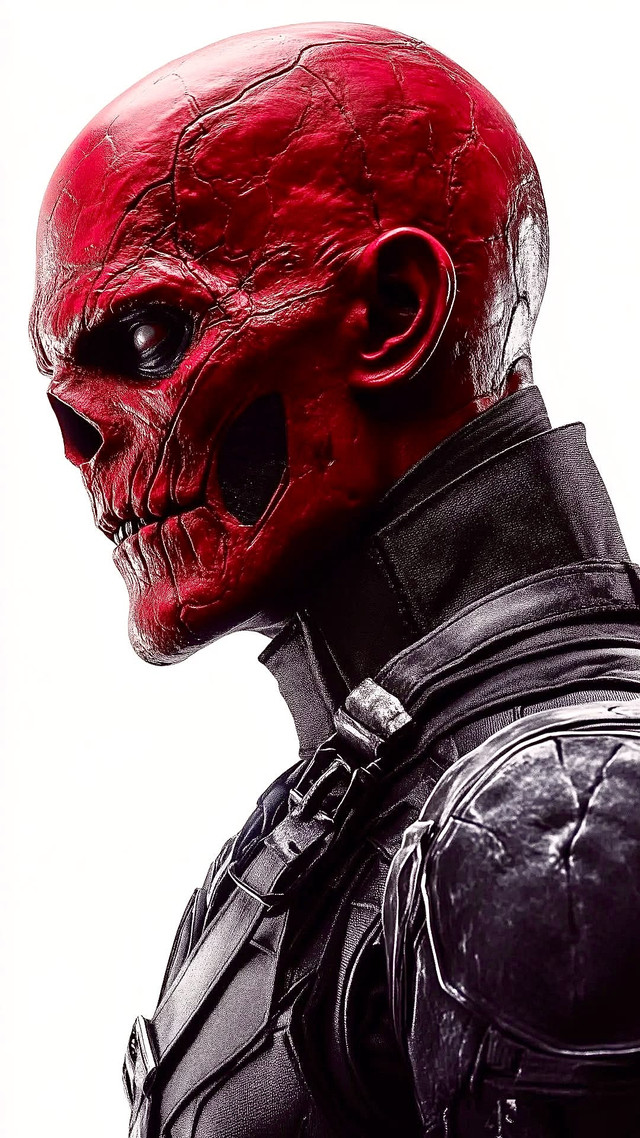
Red Skull
Johann Shmidt
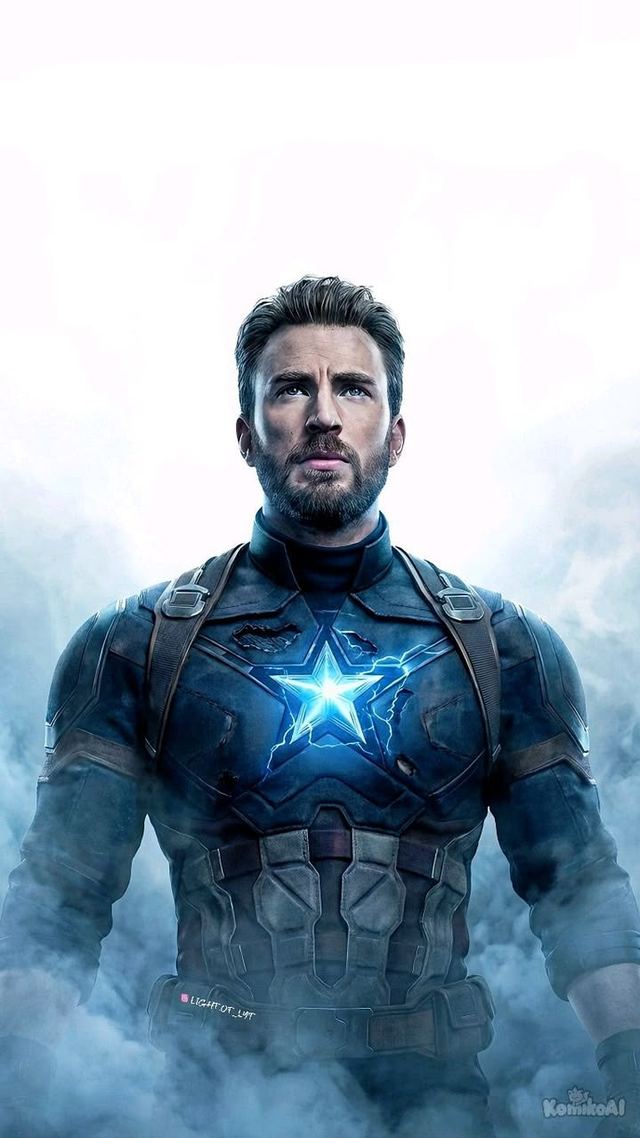
Captain America
Steven Grant Rogers
Catching up on the MCU? See where this fits on our full timeline.
Read next
How Does Doom Actually Build Battleworld? Two Leaks Give Two Different Answers
Every leak agrees Doom ends up ruling Battleworld. They don't agree on how he builds it — one describes colliding…
The Steve Rogers "Baby" Shot Everyone's Debating: What It Actually Shows, and What It Doesn't
Official footage really does show Chris Evans holding a baby in a quiet, sunlit scene. What that means — retirement…
Hydra's Secret Files on Latveria: The Clue We Missed in 2014
Not a real easter egg: a rewatch game imagining what Hydra's files might have said about Latveria, plus the…